A water softener can reduce calcium and magnesium hardness, but the 2011 Softened Water Eczema Trial did not find that adding an ion-exchange softener to usual care improved eczema severity in children. If eczema is the only reason you are considering a softener, the trial does not support treating the equipment as an eczema therapy.
That does not make water quality irrelevant to household comfort. Hardness changes how soap lathers and contributes to scale. Those are valid reasons to evaluate a softener, provided the decision is kept separate from medical treatment.
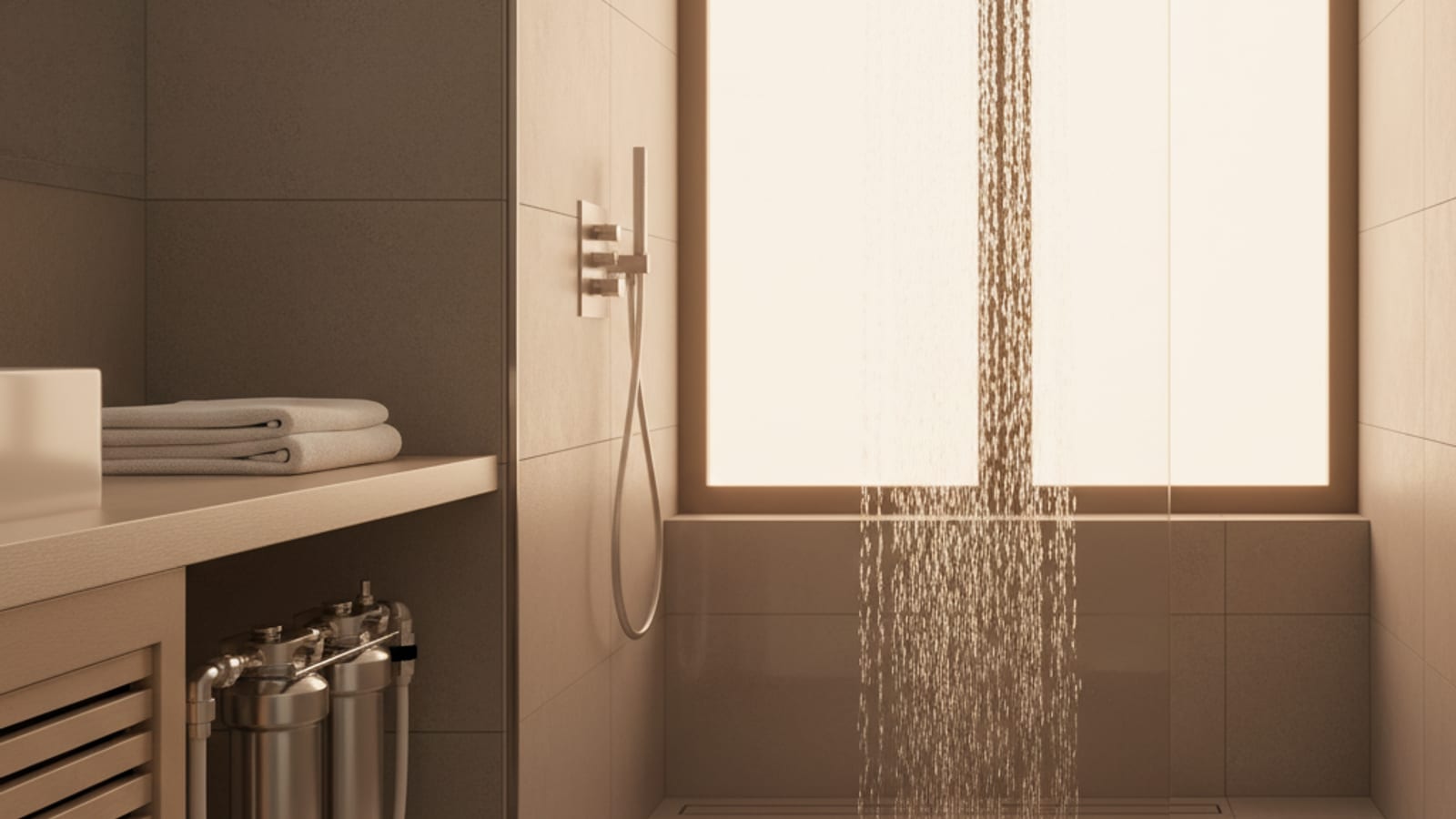
What a water softener actually changes
A conventional ion-exchange softener reduces calcium and magnesium, the minerals that create water hardness. That can change soap lather, mineral deposits on fixtures, and scale in plumbing or water-using appliances.
A softener is not a general-purpose filter. It should not be assumed to reduce disinfectants or every substance named in a water-quality report. If you have a separate concern such as taste, odor, or a particular constituent, identify it first and compare the exact model’s certified reduction claim.
For homes served by the City of San Diego, the City says drinking water averages about 16 grains per gallon and can range from 16 to 18 grains depending on water demand and the area of the city. That figure does not describe every water district in San Diego County or a private well. Start with the report from the utility that serves your address.
What the eczema trial found
The Softened Water Eczema Trial enrolled 336 children ages 6 months to 16 years with moderate or severe eczema who lived in hard-water areas in England. For 12 weeks, researchers compared usual eczema care plus an ion-exchange softener with usual care alone. Trained nurses who did not know the treatment assignment measured the primary outcome.
The study found no between-group difference in the main measure of eczema severity. It also found no between-group difference in the use of topical corticosteroids or calcineurin inhibitors. The authors reported small differences in some parent-reported secondary outcomes, but cautioned that these could reflect response bias because families knew whether they had a softener.
This trial tested softeners as an addition to usual care for children who already had eczema. It did not test every filtration technology, every water supply, or whether a particular person’s symptoms have another trigger. Its practical conclusion is narrower: an ion-exchange softener should not replace normal eczema care, and the trial did not show an added clinical benefit for this use.
What the trial does and does not answer
The randomized trial directly compared usual care with and without an ion-exchange softener. It did not show an added clinical benefit from the softener, establish what caused a child’s eczema, or test separate filtration claims.
It is also important to separate hardness from disinfectants. A softener’s role is hardness reduction. A separate filtration product may have a certified claim for a specific disinfectant or other substance, but that claim does not establish an eczema benefit.
A practical way to decide
If you are considering treatment for the home, use this sequence:
- Keep medical care with a qualified clinician. Ask a pediatrician or dermatologist about diagnosis, triggers, and treatment for you or your child.
- Confirm the water source. Read the current consumer confidence report from the utility serving the address. Private wells require a different testing approach.
- Name the non-medical water problem. Scale, soap performance, taste, and a specific constituent call for different equipment.
- Compare the exact equipment. For a softener, look for the model’s NSF/ANSI 44 certification, rated working capacity, and water and salt efficiency. For filtration, verify the exact certified reduction claim.
- Count ownership requirements. Include installation, replacement media or filters, salt where applicable, maintenance, and water use.
A provider’s free in-home visit can help screen conditions relevant to sizing and explain equipment choices. Ask what the visit measures. A field screen is not a laboratory analysis and cannot identify every constituent or establish the cause of a skin condition.
Frequently asked questions
Can softened water feel different when bathing?
It can. Reducing hardness changes how soap lathers and rinses, which some households notice as a different bathing feel. That preference is separate from evidence of eczema treatment.
Does a softener remove chloramine?
Do not assume it does. Ion-exchange softeners are designed around hardness reduction. If disinfectant reduction is your goal, check your utility’s report and verify a treatment model’s specific certified claim.
Should I install a softener specifically for eczema?
The large randomized trial did not show an added improvement in eczema severity from a softener. Evaluate a softener for confirmed hardness concerns, and make eczema decisions with a clinician.
Can an in-home water test diagnose a skin trigger?
No. A field screen can discuss or measure only its stated water parameters. It does not diagnose eczema, prove what triggers symptoms, or replace a certified laboratory when constituent-specific testing is needed.
If you want to evaluate hardness for scale, soap performance, or equipment sizing, request a free in-home water test or call (858) 400-6508. Filter Pros San Diego introduces homeowners to independent licensed providers; the provider explains the screening scope and gives any equipment recommendation or quote. You can also review hard-water solutions and what a water system for sensitive-skin households can and cannot address.