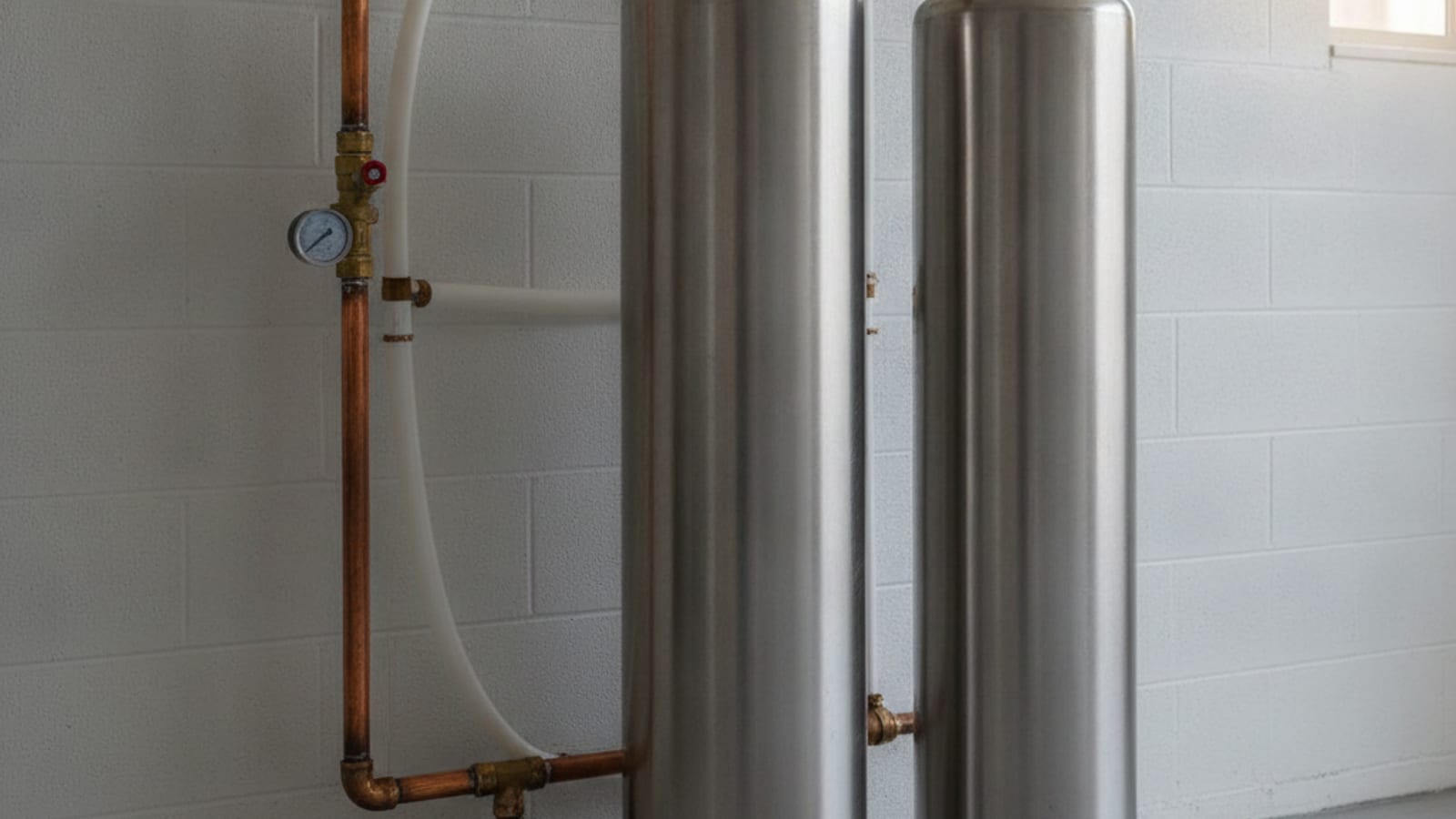
Well-water treatment cost depends on what a state-certified laboratory finds, the treatment goal, household demand, plumbing and the exact equipment proposed. A field screen can help begin the conversation, but it is not an all-contaminant analysis or a safety clearance. The provider’s written scope and price control the actual project.
Why well-water treatment costs vary
Public water systems treat and monitor their supply and publish consumer confidence reports. A private-well owner is responsible for testing the well and responding to its results. Nearby wells can differ, so utility data and a neighbor’s equipment are not substitutes for testing your water.
Each treatment stage has a limited purpose. The final cost therefore depends on which concerns testing identifies, which exact certified claims apply, required flow, installation access and ongoing maintenance. Do not assume that every well needs a multi-stage system.
The cost drivers, stage by stage
Sediment filtration. If testing and inspection identify suspended sediment, compare the filter’s rated flow, replacement schedule and pressure-loss information. A sediment filter does not establish that the water is free of microorganisms or dissolved chemicals.
Iron and manganese. EPA’s secondary guideline associates iron with rusty color, sediment, metallic taste and reddish or orange staining. Laboratory results and water conditions should guide the technology choice; request the exact model’s documented claim and maintenance needs.
Rotten-egg odor. The odor can have more than one source, including plumbing or a water heater. Investigate the source before selecting treatment. Our guide to rotten-egg smell in San Diego well water explains the diagnostic sequence.
Microbial concerns. CDC recommends annual private-well testing for total coliform, nitrate, TDS and pH, plus locally relevant tests advised by health or environmental authorities. A positive total-coliform result is an indicator, not identification of every pathogen. If harmful contamination is known or suspected, use another safe water source and contact the health department; test again to confirm treatment worked before resuming use.
Hardness. A laboratory result can establish the well’s hardness. Ion exchange reduces calcium and magnesium hardness; salt-free conditioning does not remove hardness ions. Compare the exact model and its documented claim rather than applying a municipal average to a private well.
pH and corrosivity. Use laboratory results and a qualified provider’s assessment before selecting treatment. Ask what the proposed model addresses, what it does not address and how performance will be confirmed.
What a full multi-stage system commonly costs
There is no verified local price table or standard stage count that applies to San Diego County wells. A proposal may include one stage or several, depending on the laboratory results and treatment goal. Equipment, capacity, plumbing changes, electrical work, permits, commissioning and future replacement items should all appear in the written scope.
Ask each provider to identify the evidence for every proposed stage and provide an itemized price. The written estimate is the actual price for that property; a generic online figure is only a planning aid.
Location does not replace testing
Do not infer a well’s chemistry from its ZIP code, distance from the coast or a municipal-water report. Ask a state-certified laboratory and local health or environmental authorities which tests fit the location and property history.
Start with a full water test, not a shopping list
Begin with appropriate laboratory testing before buying equipment. Filter Pros San Diego can connect you with an independent licensed provider for a free in-home field screen and site assessment. That screen can support an initial discussion, but it does not identify every contaminant or replace a state-certified laboratory. Learn more about well-water treatment or explore whole-house water filtration services.
Frequently asked questions
Why is well water treatment more expensive than city water treatment? Private-well owners are responsible for testing and any needed treatment. Cost depends on the laboratory findings, exact equipment and installation scope; there is no universal number or stage count.
Do I need to test my well water every year? CDC recommends testing a private well annually for total coliform, nitrate, TDS and pH, and asking local health or environmental authorities about additional tests for the location.
Can I install well water treatment in phases instead of all at once? Ask the laboratory, health department and licensed provider whether phasing is appropriate. Known or suspected harmful contamination requires another safe water source and health-department guidance; budget should not be used to assume which concern can wait.
Does homeowners insurance ever cover well water treatment? Coverage depends on the policy and cause of loss. Ask the insurer for a written coverage determination before relying on reimbursement.
The bottom line
Well-water treatment cost follows the verified concern, exact equipment and installation scope. Start with appropriate laboratory testing, compare itemized proposals and rely on the chosen provider’s written quote. Call (858) 400-6508 to arrange a free field screen and site assessment with an independent licensed provider.