How a whole-house water filtration system works
A point-of-entry water-treatment system is installed on the line serving the home, so the fixtures downstream receive treated water. What it reduces depends on the exact equipment, media, flow conditions, and certified claims. Understanding that scope helps you compare a whole-house system with a point-of-use device at one tap.
What you'll learn
- What a point-of-entry system does compared with a point-of-use device
- Why treatment stages must be selected for identified water concerns
- How sediment and carbon media may serve different roles in a system
- Why flow, capacity, installation requirements, and exact certified claims matter
- How the manufacturer's service and media-replacement requirements affect ownership
Step by step
- Identify which fixtures are downstream from the proposed installation point and whether any lines, such as irrigation, should be excluded.
- Use the serving utility's current report and appropriate testing to define the concerns the system needs to address.
- Compare each proposed stage with the exact model's certified reduction claims; no single technology removes every contaminant.
- Confirm the system's rated flow and capacity against household demand and the installation conditions.
- Review bypass, drain, pressure, permit, and installation requirements with the licensed provider and the manufacturer's instructions.
- Follow the exact model's maintenance schedule and include replacement media, water use, and service in the ownership cost.
If chloramine is a concern, first confirm the disinfectant in your serving utility's current report. Then compare the exact system's independently certified reduction claim, rated flow, capacity, and replacement schedule. A generic carbon-media description does not prove performance for a particular model.
Rather have a pro handle it?
Connect with a separately licensed water-treatment provider in San Diego County. Ask about the free in-home water test.
Keep learning.
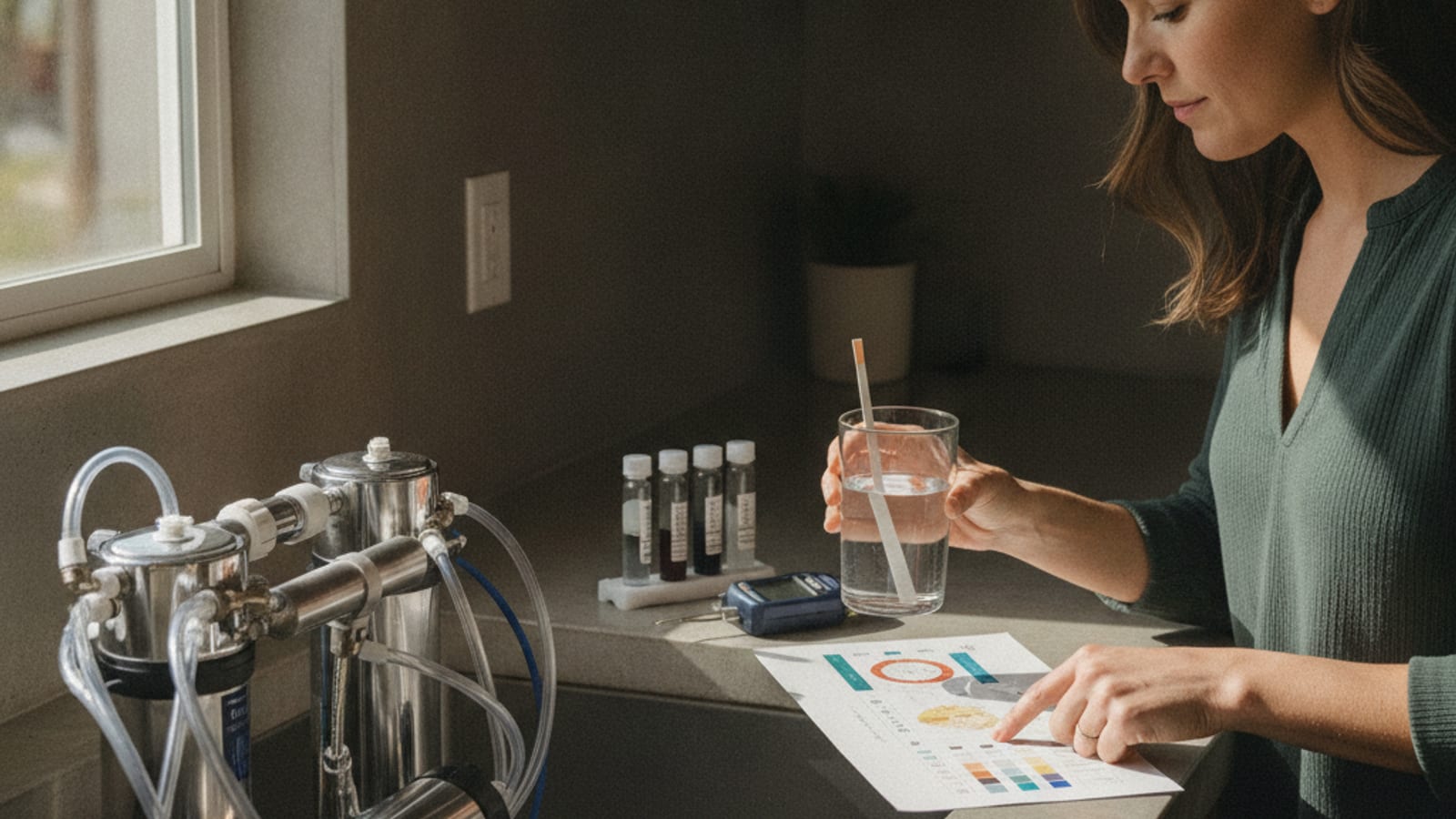
How to test your tap water at home
The City of San Diego reports that drinking water in its system averages about 16 grains per gallon and varies by area and water demand. A home test strip can provide a quick screening result for the measures listed on that kit, but it does not replace a laboratory analysis or establish that water is safe.
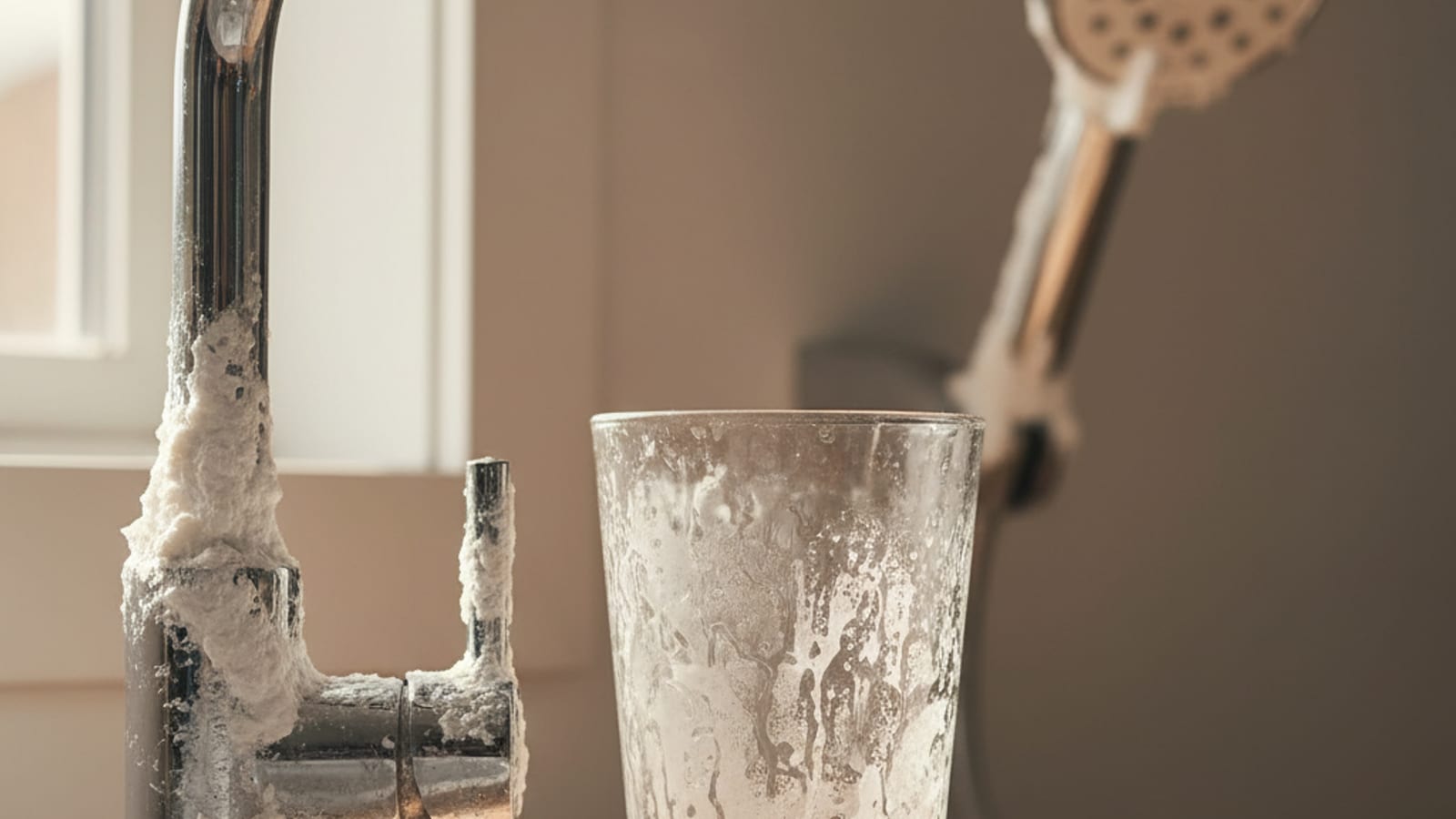
How to spot hard water in your home
Hardness minerals are not obvious from the water's smell or appearance, but scale, spotting, and changes in soap lather can provide useful clues. Those signs can have other causes, so confirm hardness with an appropriate test before choosing treatment.
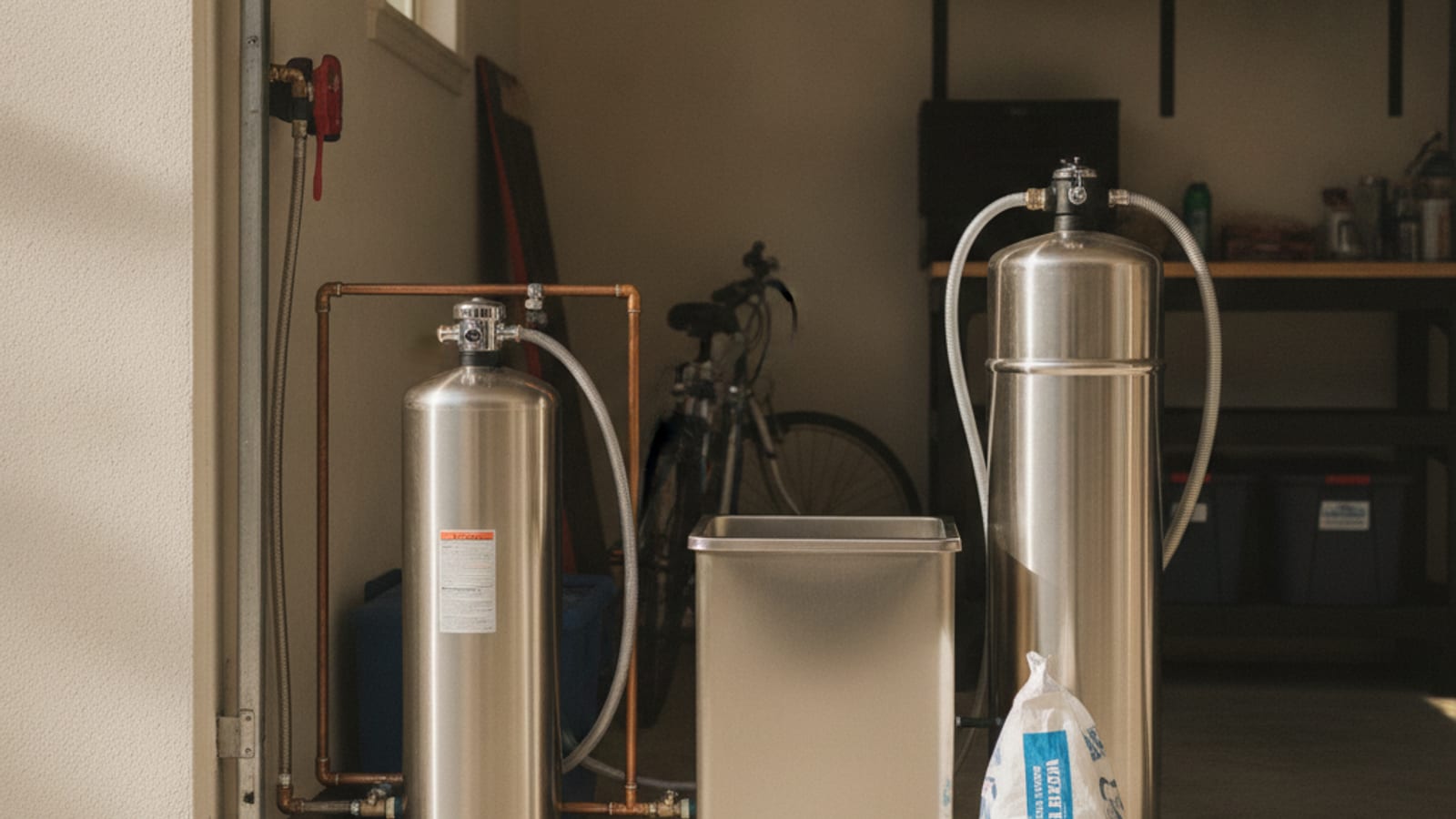
Salt-free conditioner vs salt softener, explained
Ion-exchange softeners and salt-free conditioners address different goals. A softener reduces calcium and magnesium hardness through ion exchange. A salt-free unit does not remove hardness ions, so its value depends on the exact model's scale-reduction claim, the water conditions, and the homeowner's priorities.