How to test your tap water at home
The City of San Diego reports that drinking water in its system averages about 16 grains per gallon and varies by area and water demand. A home test strip can provide a quick screening result for the measures listed on that kit, but it does not replace a laboratory analysis or establish that water is safe.
What you'll learn
- How to follow a home test kit's directions for the measures listed on its label
- How to read a hardness result and compare it with your serving utility's current report
- How a simple soap check can provide another clue about hardness
- Why a field screen cannot identify every contaminant or establish water safety
- When to use a state-certified laboratory or discuss treatment goals with a provider
Step by step
- Check the package to confirm what the kit measures, its expiration date, and any preparation instructions.
- Collect cold tap water in the container specified by the kit, following its instructions for flushing or sample handling.
- Use the strip for exactly the dip time and development time printed by the manufacturer.
- Compare the result with the kit's chart under good light and record the value, units, date, and tap tested.
- Compare the result with the current water-quality report from the utility serving your address; do not apply City of San Diego figures to another system or a private well.
- If you suspect contamination the kit does not measure, use an appropriate state-certified laboratory and follow local health guidance.
Home strips and a free in-home field screen are limited to the measures and methods used. They cannot rule out PFAS, lead, arsenic, bacteria, or other contaminants unless the specific test is designed and validated for that purpose. Ask what is being measured and use appropriate laboratory testing when safety or a specific contaminant is the concern.
Rather have a pro handle it?
Connect with a separately licensed water-treatment provider in San Diego County. Ask about the free in-home water test.
Keep learning.
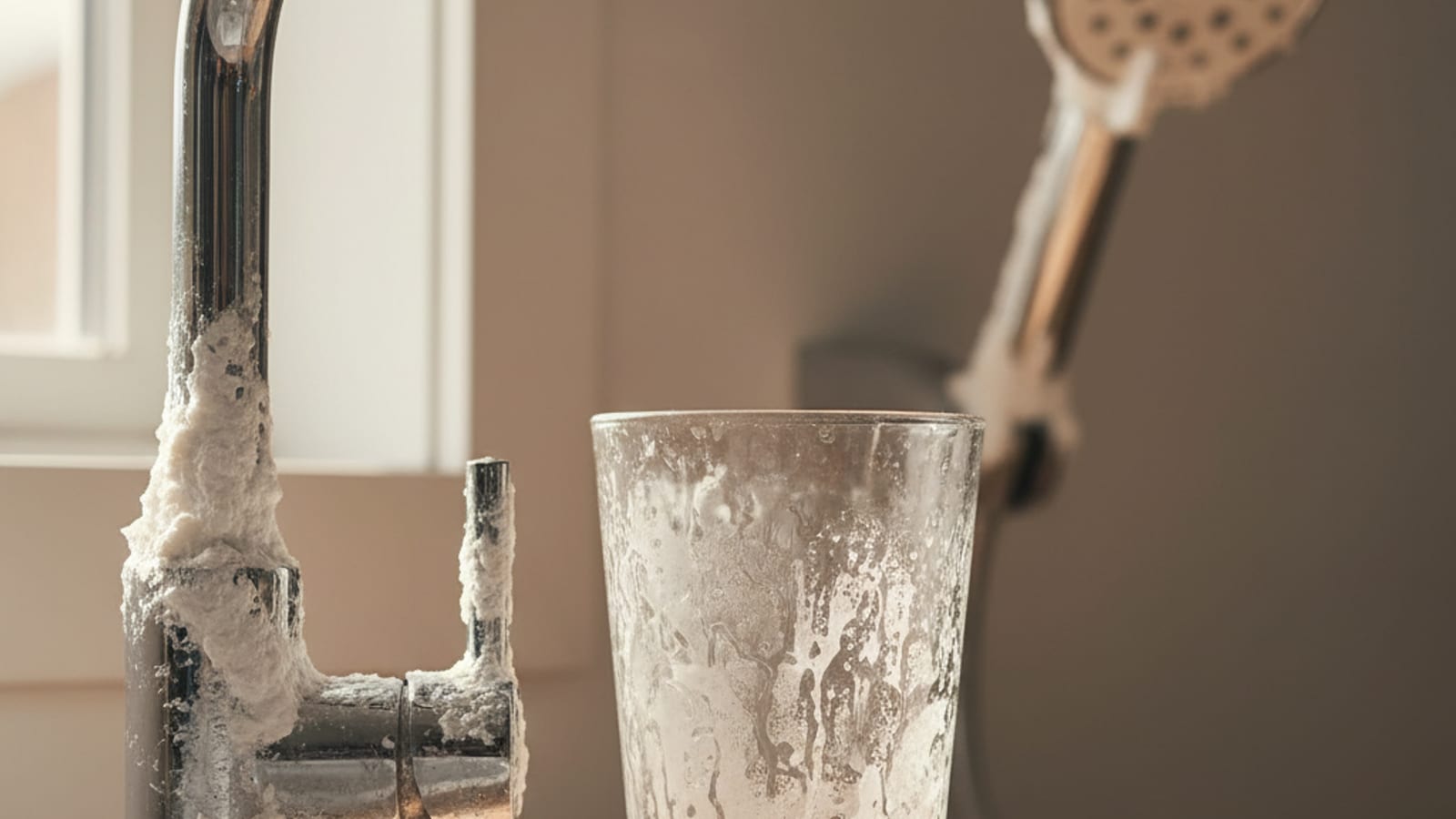
How to spot hard water in your home
Hardness minerals are not obvious from the water's smell or appearance, but scale, spotting, and changes in soap lather can provide useful clues. Those signs can have other causes, so confirm hardness with an appropriate test before choosing treatment.
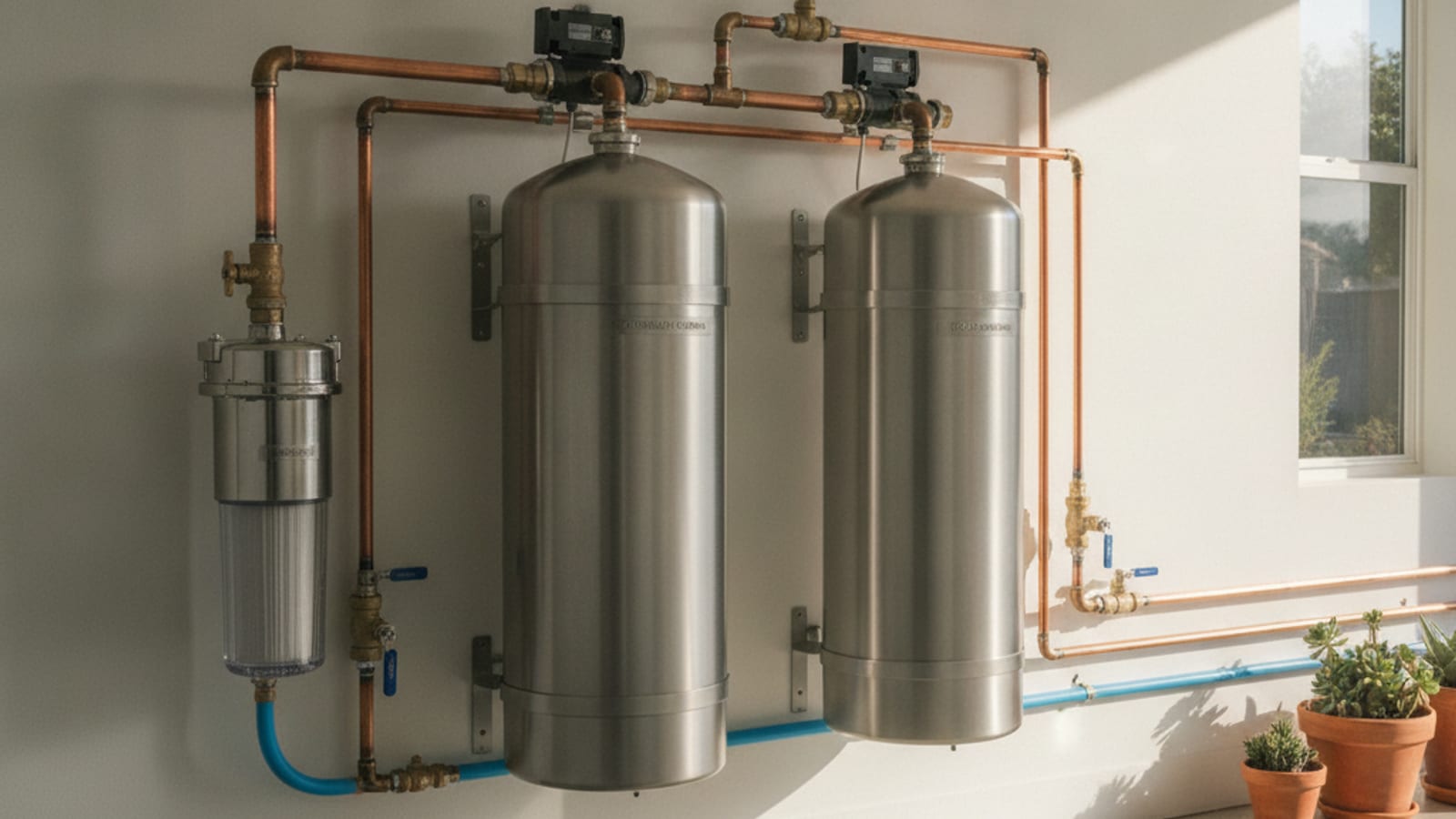
How a whole-house water filtration system works
A point-of-entry water-treatment system is installed on the line serving the home, so the fixtures downstream receive treated water. What it reduces depends on the exact equipment, media, flow conditions, and certified claims. Understanding that scope helps you compare a whole-house system with a point-of-use device at one tap.
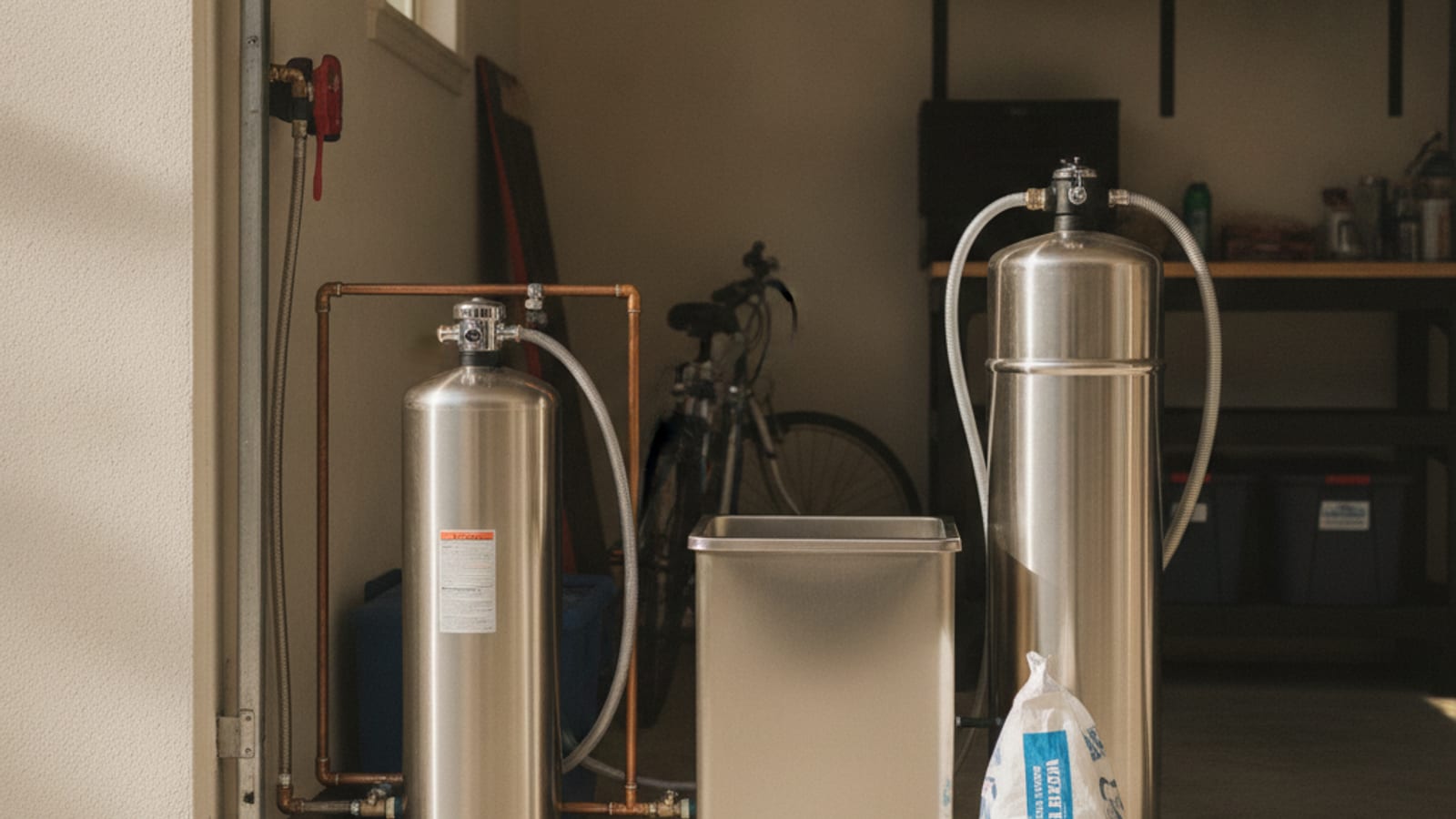
Salt-free conditioner vs salt softener, explained
Ion-exchange softeners and salt-free conditioners address different goals. A softener reduces calcium and magnesium hardness through ion exchange. A salt-free unit does not remove hardness ions, so its value depends on the exact model's scale-reduction claim, the water conditions, and the homeowner's priorities.