How to spot hard water in your home
Hardness minerals are not obvious from the water's smell or appearance, but scale, spotting, and changes in soap lather can provide useful clues. Those signs can have other causes, so confirm hardness with an appropriate test before choosing treatment.
What you'll learn
- Where mineral scale and spotting commonly appear around a home
- Why soap lather can change as hardness increases
- How to use a simple soap check as a clue rather than a measurement
- Why scale in water-heating equipment deserves attention
- When the signs may point to a different water-quality or plumbing issue
Step by step
- Check faucet bases and showerheads for white or chalky deposits, and note where they appear.
- Look at glassware after washing and determine whether spots or film remain after rinsing.
- To make a simple comparison, use two clean clear containers, the same amount of water, and the same measured amount of plain liquid soap.
- Shake both samples the same way and compare the amount of suds and cloudiness; treat the result as a clue, not a hardness measurement.
- Inspect an accessible faucet aerator for mineral-looking debris without forcing or disassembling pressurized plumbing.
- Record the symptoms and confirm hardness with a test that reports a value before selecting equipment.
Visual signs and a soap comparison can suggest hardness, but neither establishes its level or rules out another cause. A provider's free in-home screen may measure hardness if that is included in the visit; ask what is tested, request the result and units, and compare treatment options by their exact claims and maintenance requirements.
Rather have a pro handle it?
Connect with a separately licensed water-treatment provider in San Diego County. Ask about the free in-home water test.
Keep learning.
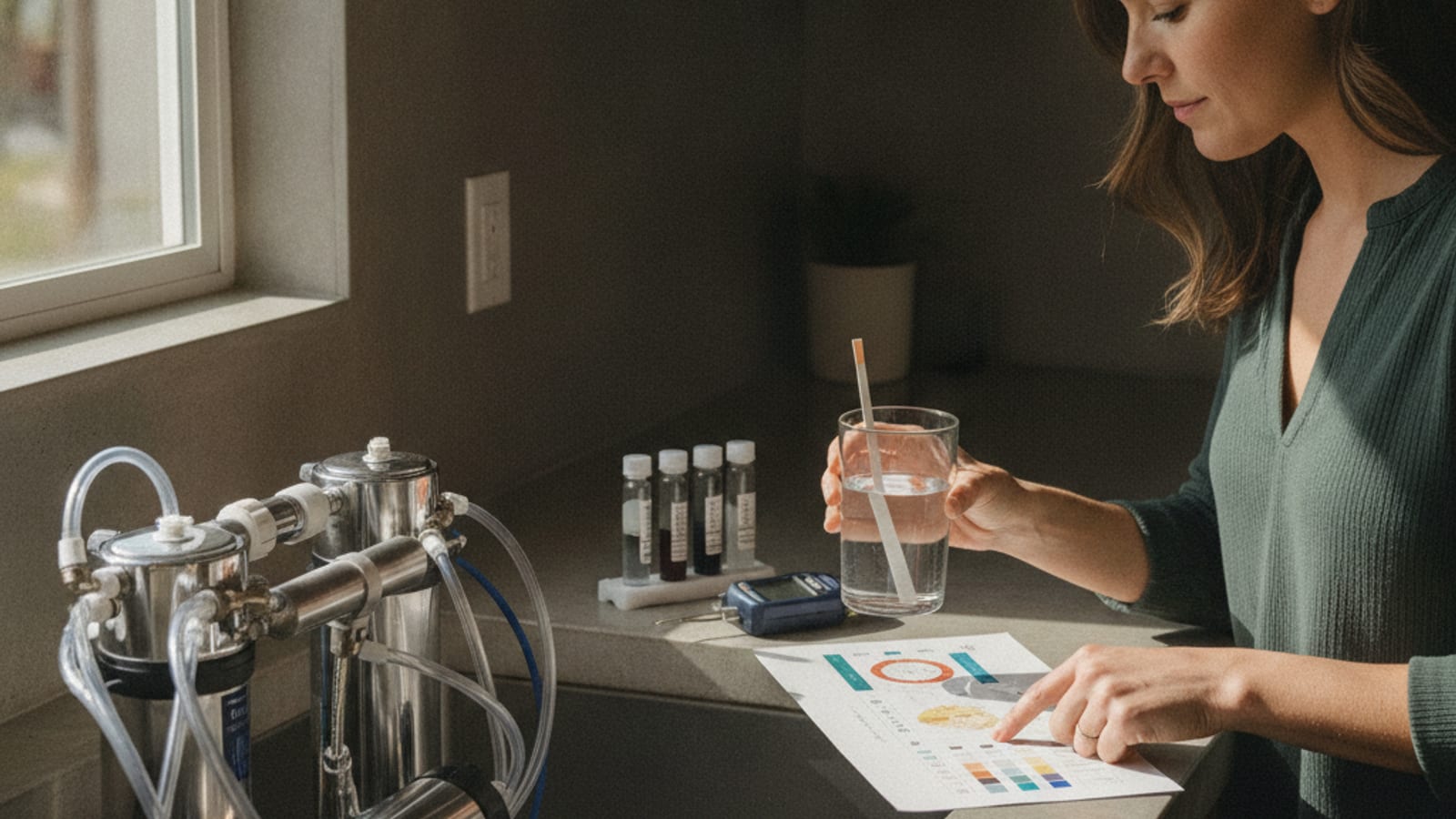
How to test your tap water at home
The City of San Diego reports that drinking water in its system averages about 16 grains per gallon and varies by area and water demand. A home test strip can provide a quick screening result for the measures listed on that kit, but it does not replace a laboratory analysis or establish that water is safe.
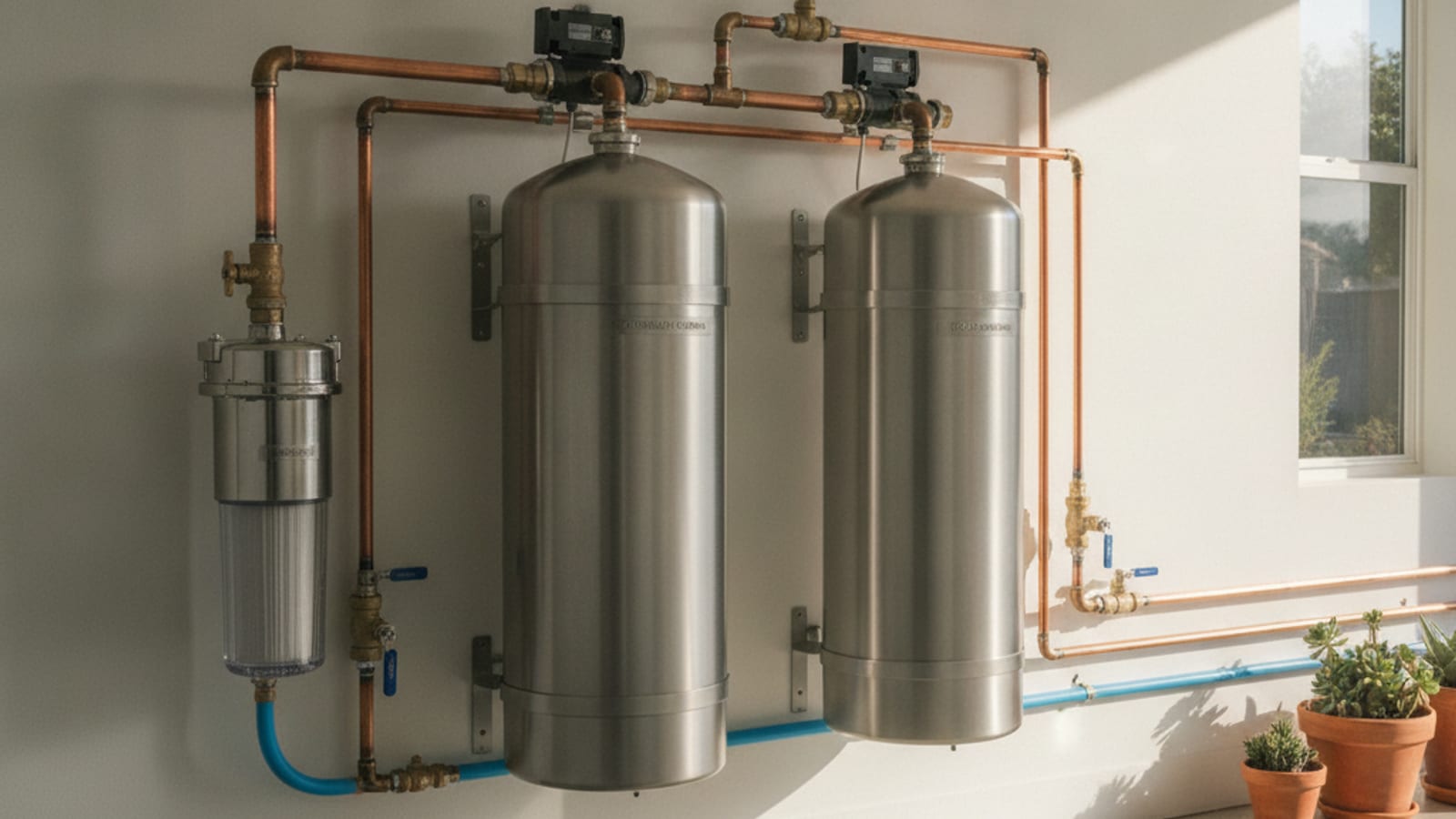
How a whole-house water filtration system works
A point-of-entry water-treatment system is installed on the line serving the home, so the fixtures downstream receive treated water. What it reduces depends on the exact equipment, media, flow conditions, and certified claims. Understanding that scope helps you compare a whole-house system with a point-of-use device at one tap.
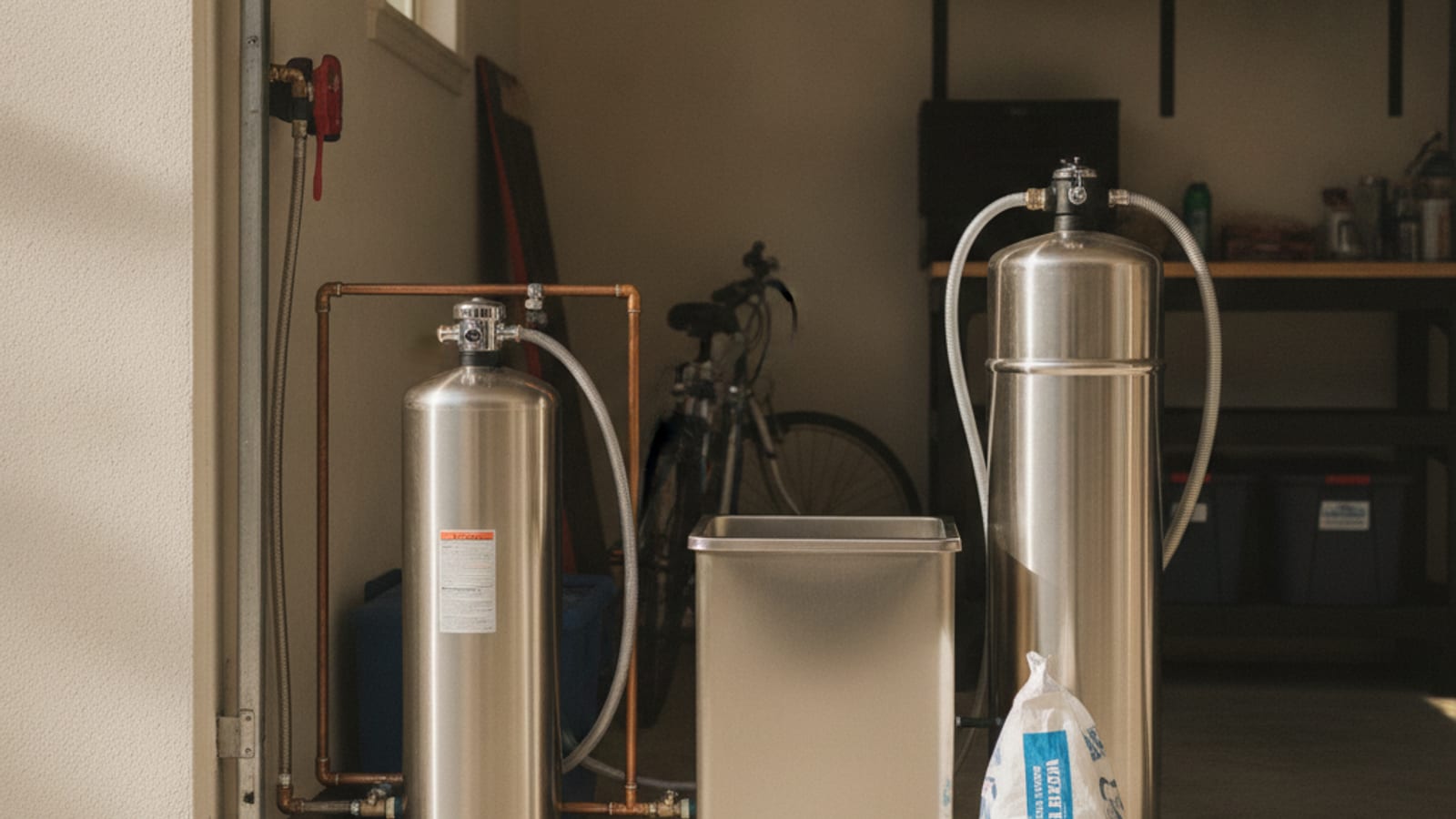
Salt-free conditioner vs salt softener, explained
Ion-exchange softeners and salt-free conditioners address different goals. A softener reduces calcium and magnesium hardness through ion exchange. A salt-free unit does not remove hardness ions, so its value depends on the exact model's scale-reduction claim, the water conditions, and the homeowner's priorities.