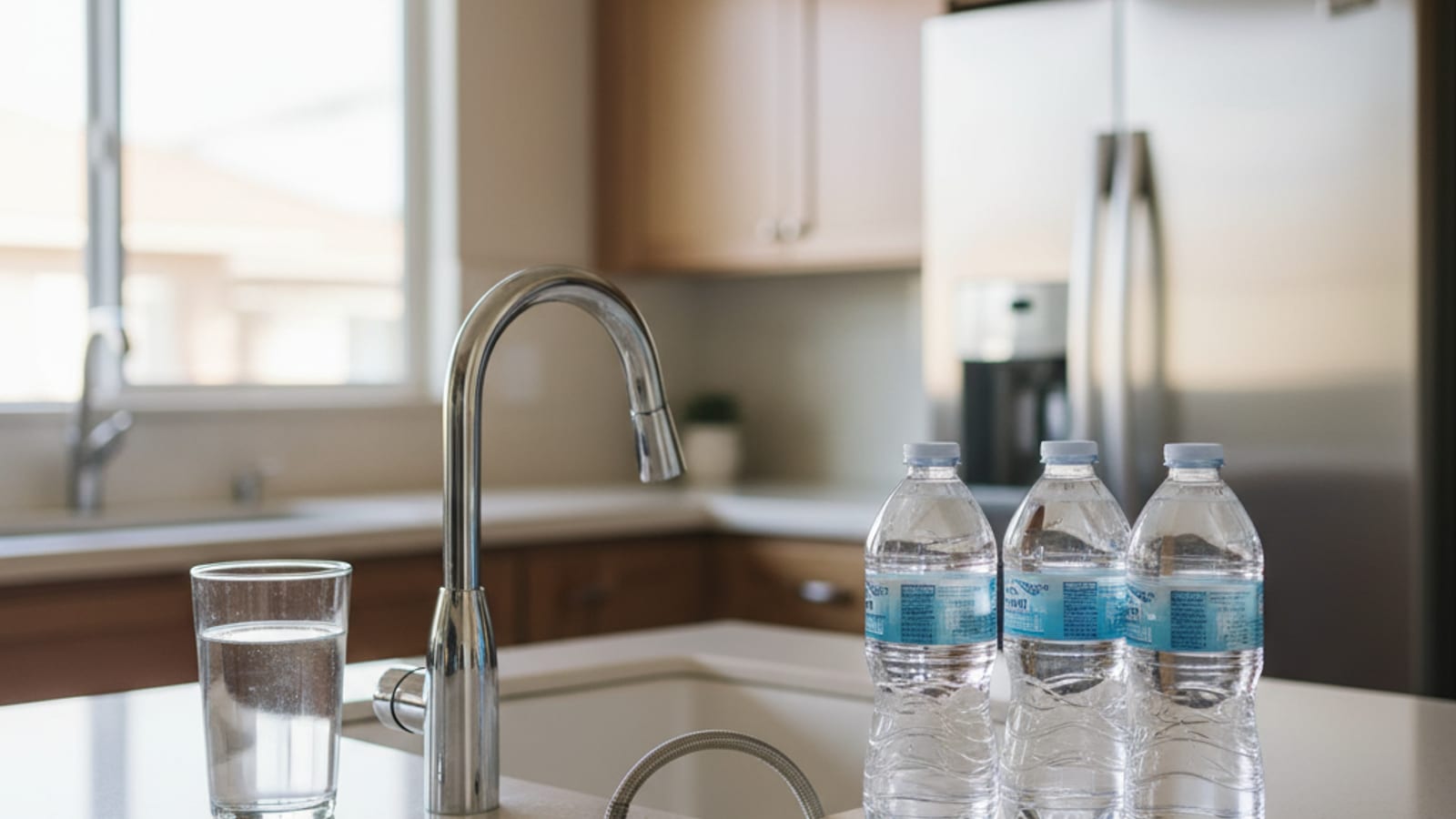
Bottled water is not automatically better or worse than water from a home filter. The answer depends on the bottled product, the tap-water source, the condition of household plumbing, the exact filter and its certified claims, and whether the equipment is installed and maintained as directed.
Bottled and public water have different oversight
The U.S. Food and Drug Administration regulates bottled water, while the U.S. Environmental Protection Agency regulates public drinking-water systems. FDA requires bottled-water producers to use sanitary production controls and sample and test source water and finished products. FDA also explains that some bottled water comes from municipal sources and may be treated before bottling.
Public water customers can use their serving utility’s current Consumer Confidence Report and notices to understand the public system. A report does not reveal the exact conditions at every household tap or account for changes inside private plumbing. For bottled water, read the source and treatment statements on the label and contact the producer for product-specific information.
The two categories should not be compared with a blanket claim that one is always cleaner. Each specific source or product has to be evaluated on its own evidence.
What a home reverse osmosis system can claim
NSF/ANSI 58 covers point-of-use reverse osmosis systems. The standard includes required TDS-reduction performance and optional contaminant-reduction claims. Certification under the standard does not mean every model reduces every optional contaminant.
Before buying an RO unit, check the exact model’s certification listing and performance data sheet. Match the certified claim to the concern identified in the utility report or appropriate testing. Also compare feed-water limits, rated flow, efficiency, reject water, installation requirements, replacement schedules, and continuing filter costs.
Compare the costs you can document
Bottled-water cost depends on brand, container size, retailer, delivery, deposits, and household use. Home-filter cost depends on equipment, installation, utility rates, replacement elements, service, and how much treated water the household uses.
Keep a short record of actual bottled-water purchases for a representative month. Compare that with written quotes for the exact filter, installation, replacement schedule, replacement-element prices, and expected water and energy use. If financing is offered, include total payments, interest, fees, ownership, and cancellation terms. That produces a household comparison without relying on a generic per-gallon price or promised payback period.
Convenience and maintenance
Bottled water is portable and can be useful when a public agency directs residents to use an alternate safe source. For routine home use, it also requires buying, transporting, storing, and disposing of containers.
A home system provides treated water at its installed point of use, but only while the equipment is operated and maintained within the manufacturer’s instructions. Filters and membranes require replacement, and an RO system produces a reject stream. Convenience depends on whether the household prefers recurring purchases or equipment maintenance.
Taste does not establish safety
People may prefer the taste of one bottled product, tap water, carbon-filtered water, or RO water. Taste can change when treatment alters disinfectants, minerals, or other compounds, but it does not show that every contaminant was removed or that water is safe.
If there is a health concern, identify the water source, check current official notices, and obtain the appropriate test. Do not select treatment only from taste or a TDS reading.
Packaging and water use
Bottled water uses single-use or returnable containers plus transportation and storage. A home RO system avoids routine single-use bottles at the tap but uses replacement components and produces reject water. The environmental comparison depends on the bottle format, transport, recycling or reuse, exact RO efficiency, and household consumption. Request model-specific data before making a numeric claim.
When bottled water makes sense
Bottled water may be practical away from home, when no suitable refill source is available, or when a utility or health authority directs residents to use an alternate safe source. Follow the authority’s instructions during an emergency; a home filter should not be assumed to make water safe unless the exact model is certified for the identified problem and the guidance allows its use.
For everyday home drinking water, compare bottled products and treatment equipment using source information, exact certified claims, maintenance, convenience, and your own documented costs.
Frequently asked questions
Is bottled water just tap water?
Some bottled water comes from municipal sources, according to FDA, and it may receive additional treatment before bottling. Check the label and producer information for the specific product.
Does reverse osmosis remove all contaminants?
No. Claims vary by exact model. Check the NSF/ANSI 58 certification listing and performance data sheet for the contaminant you want to reduce.
Is bottled water cheaper than filtered water?
There is no universal answer. Compare your actual purchases with the complete written ownership cost for the exact system, including installation, replacement elements, service, utilities, and any financing terms.
Can a free in-home test choose the right filter?
It can help with an initial field assessment of agreed parameters, but it is not a complete laboratory contaminant screen. Use the utility’s current report and appropriate certified laboratory testing when needed, then match the finding to an exact-model claim.
To compare a reverse osmosis drinking water system with your current bottled-water routine, call Filter Pros San Diego at (858) 400-6508. The independent licensed provider explains the assessment scope and provides the equipment, maintenance, and price in writing.
Related reading: