A water softener bypass valve isolates the unit so household water keeps running. Use it for a leak, service, vacation, or an outdoor spigot that runs through the softener. Confirm the house still has water, then return the valve to service.
What bypass does, and what it does not do
Bypass routes water around the softener so household taps keep running while the unit is isolated. It doesn’t repair a leak, a stuck cycle, or a pressure problem. Culligan’s bypass guide draws the same line: water continues, treatment stops.
While the valve is in bypass, hardness minerals go into the house untreated. Soap may lather less. Glass can spot more. That change is expected. It isn’t a second equipment failure.
The EPA’s May 2026 water-softener guide says to follow the model’s own bypass instructions. A diagram for another brand is not your procedure.
If you are stopping a leak, bypass is a first control step. Then follow what to do when a water softener is leaking. Isolation is not a repair.
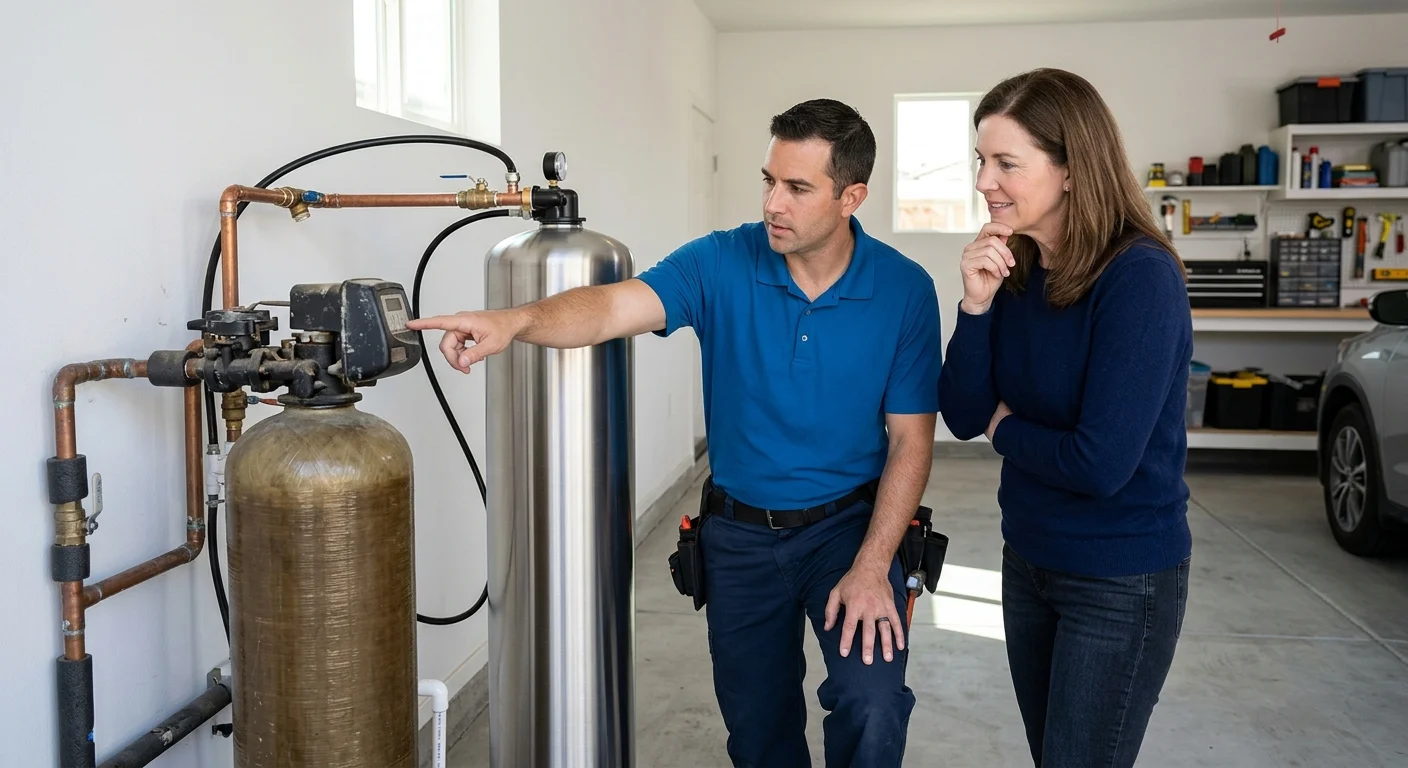
Find the valve on your installation
Look for the bypass on the pipes at or just behind the control head. Culligan notes it may be labeled bypass and service, use a colored handle, or show flow arrows.
On a three-valve plumbing bypass you will see three handles: inlet, outlet, and a middle connecting valve. On some smart units, bypass also appears in an app or on the display. Do not guess from cabinet color.
If you can’t find a labeled assembly, stop. Do not turn nearby ball valves at random. Photograph the pipes around the control head and use the model manual, or call a licensed professional.
Common valve types, without guessing yours
Valve types differ, and the correct motion is the one on your labels and manual. Culligan lists a lever, a pair of knobs, a three-valve plumbing assembly, and app control. Those are hardware families, not one handle direction for every home.
A lever-style bypass usually slides between service and bypass. Knob-style valves turn to a marked position. On a three-valve assembly, Culligan describes closing the inlet and outlet valves and opening the middle connecting valve. Confirm that sequence on the labels for that install.
On some Fleck-style dual-handle valves, manufacturer diagrams show service when the handles sit parallel to flow and to each other. They show bypass when the handles turn toward each other. Always match the stamped SERVICE and BYPASS labels on that valve. Do not copy a photo of a different brand.
You should feel a smooth move. If the handle is stuck, stop. Do not force it. Do not tap, strike, or hammer a button, pin, or handle to free it. A stuck bypass belongs to a licensed professional.
Confirm you are actually in bypass
Run a cold tap after you move the valve, and look for untreated water at that fixture. Culligan recommends this check because handle position alone can mislead you.
If you are used to softened water, soap may feel different. Spotting can return. City of San Diego drinking water typically averages about 16 grains per gallon, or 276 ppm. It can range from 16 to 18 grains by area and demand. That is a City plumbing-page figure, not countywide and not well water. Helix Water District treats 10 or more grains as hard. A fast return of spotting after bypass is expected on a hard supply.
Some displays and apps show bypass status. Use those only if they belong to your model. If the tap still feels treated, recheck the labels. Do not add force.
When to leave it bypassed, and when to call
Leave the unit bypassed for a leak, short service, or while you wait for a licensed professional. Long-term bypass is untreated water through the house, not a workaround.
Bypass also fits outdoor watering if those spigots currently run through the softener. Use it for a short hardness comparison at a cold tap. Use it for a vacant stretch, such as vacation, when you accept untreated water. Many outdoor lines never pass through the unit. Bypass doesn’t change those spigots.
Return the valve to the labeled service position when isolation is no longer needed. That means the leak is repaired, the work is done, or you no longer want untreated water. Run a cold tap to flush the lines before hot water or appliances.
Call a licensed professional when the handle won’t move or leaks at the assembly. Call if water still escapes after bypass, or you can’t identify the valve. Call if drain flow won’t return to a normal service display, or pressure stays low and the unit needs diagnosis rather than isolation.
A unit that keeps running or draining needs model-specific inspection. Bypass can stop extra flow through the resin tank. It doesn’t explain why the drain is running.
Low pressure after a water softener is a different question. Comparing pressure in service and in bypass can help a pro locate the restriction. That isn’t a repair by itself.
If the diagnosis points past a stuck handle, use when to repair or replace a water softener to frame the next decision. Ask for the failed part, labor, warranty effect, and price in writing.
Request a local referral
Filter Pros San Diego is an independent information and referral site. We do not install or repair equipment, and we do not hold a contractor license. We connect homeowners with separately licensed water-filtration professionals. The homeowner contracts with and pays the selected professional directly.
Call (858) 400-6508 or use our water softener repair page to request a local match. Share the model number, bypass position, and why you isolated the unit. Response time, diagnosis, parts, and warranty must be confirmed with the professional.
Frequently asked questions
These answers cover the checks homeowners make after they isolate a softener.
How do I know the softener is in bypass?
Read the SERVICE and BYPASS labels on the valve, then run a cold tap. Untreated water can change soap feel and spotting. Some models also show bypass on a display or in an app.
What happens to household water in bypass?
Taps keep running, but the water isn’t softened. Soap and spotting can change. That’s expected. A drinking-water filter on a separate line, such as reverse osmosis at the kitchen sink, is a different system. The softener bypass does not control it.
Should I bypass the softener for outdoor watering?
Only if those outdoor spigots currently run through the softener. Culligan notes that watering and car washing do not need softened water, and that many homes already have unsoftened outdoor lines.
What if the bypass handle is stuck?
Do not force it, and do not strike it. Photograph the assembly and call a licensed professional.
Does bypass fix a leak or a unit that will not stop draining?
No. Bypass isolates the softener so household water can continue. It doesn’t repair a leak, a stuck cycle, or a failed valve. Keep the unit isolated and arrange inspection.
How do I put the softener back in service?
Move the valve back to the labeled service position using the model manual. Run a cold tap to flush untreated water from the lines. If soap feel doesn’t return to the treated pattern you know, the valve may not be fully in service.