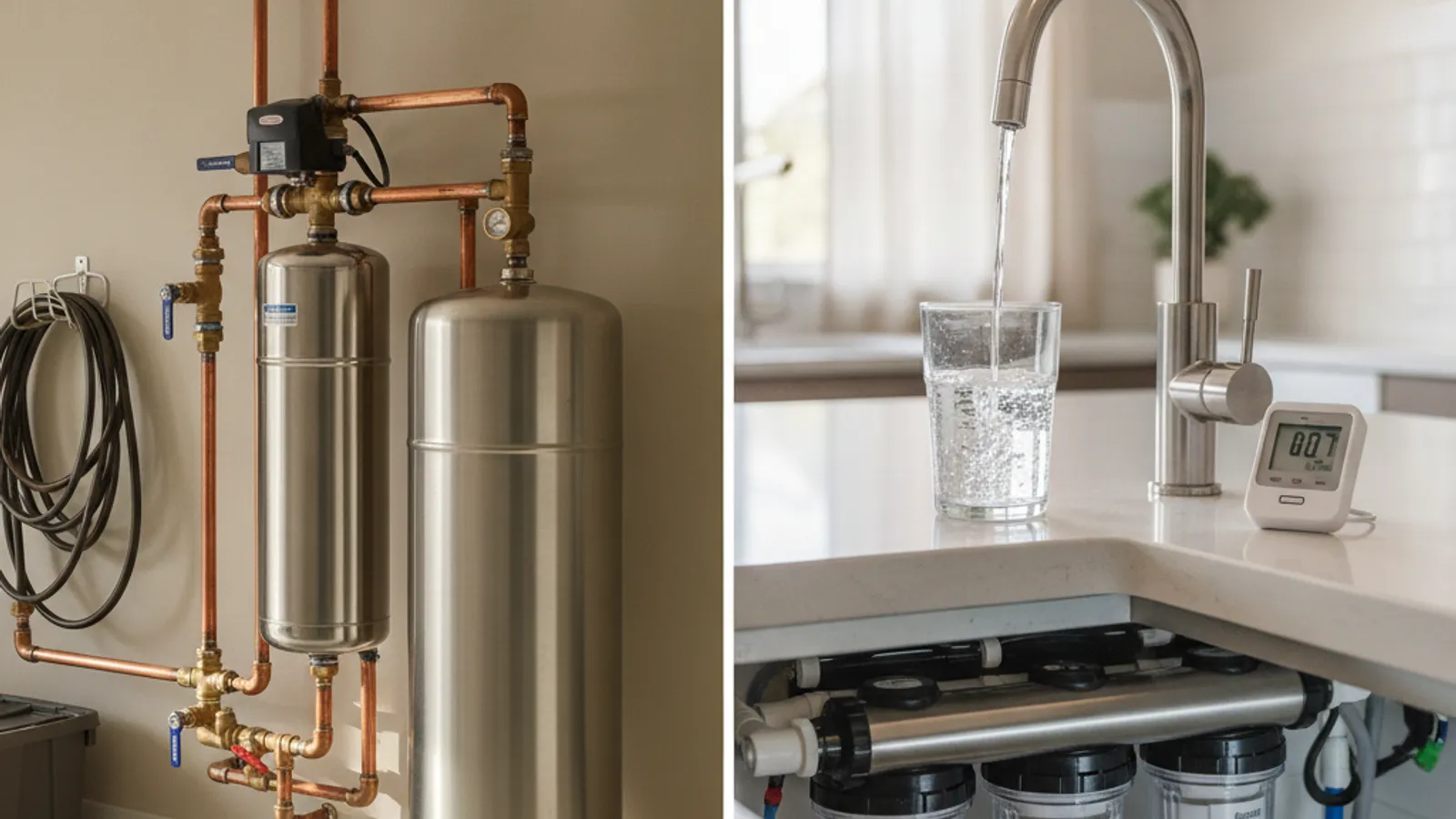
A water softener and a reverse osmosis system do different jobs, but every San Diego home does not automatically need both. An ion-exchange softener treats calcium and magnesium hardness, usually at the main water line. A point-of-use reverse osmosis system treats water at a selected tap. Choose one or both after defining the water concern, checking the serving utility’s current report or appropriate test results, and verifying the exact model’s certified claims.
Water softener vs reverse osmosis: what’s the difference?
Search “water softener vs reverse osmosis” and most of what comes back is national retailers comparing countertop pitchers to whole-home equipment, or vague buying guides written for no city in particular. That muddies a decision that’s actually pretty simple once you separate the two jobs.
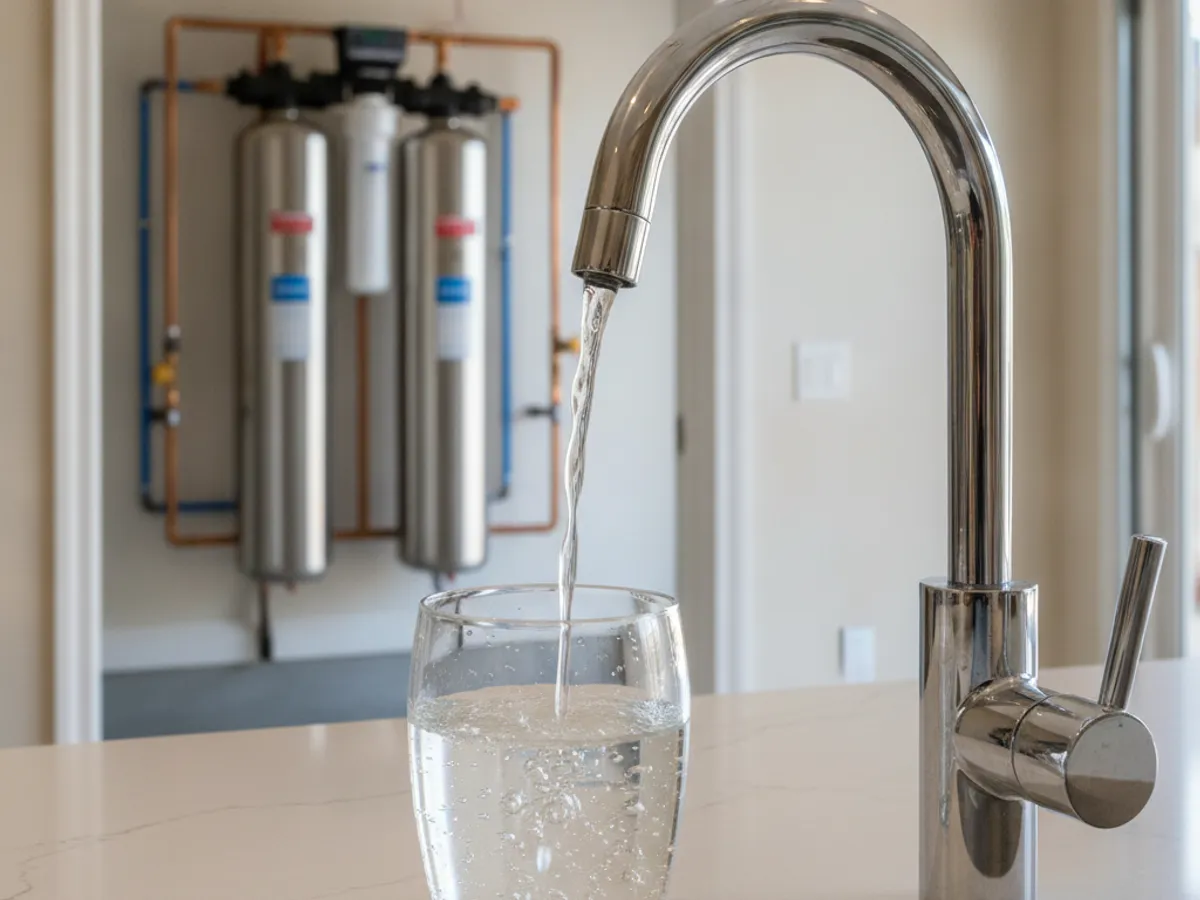
A softener is a whole-house system installed where your main line enters the home. It swaps out the calcium and magnesium that make San Diego water hard, so softened water reaches fixtures connected to the treated supply. The installation plan should identify any bypassed lines. Reverse osmosis is a point-of-use system, almost always installed under the kitchen sink, that purifies water at one faucet for drinking and cooking. It has no effect on the water going to your shower or your dishwasher.
The City of San Diego reports that its drinking water typically averages about 16 grains per gallon and ranges from 16 to 18 depending on demand and the area served. That figure does not describe every county water system, private well, or individual tap. Use the current report from the serving utility and appropriate testing rather than assuming the same conditions everywhere.
What a water softener actually treats
Ion-exchange softeners reduce calcium and magnesium hardness using resin that exchanges ions. Compare the exact model’s working capacity and efficiency with measured hardness and household demand. Hardness reduction does not establish an appliance-lifespan guarantee or removal of every cause of spotting.
NSF/ANSI 44 covers ion-exchange softeners certified to reduce calcium and magnesium hardness. It does not establish reduction of every contaminant. If salt and brine are a concern, compare salt-free conditioners by their exact scale-reduction claim, because conditioning does not remove hardness ions. A water softener installation should be sized from measured hardness and household water use.
For a property with onsite septic, the EPA recommends checking with the septic manufacturer or local service provider about performance, overload, and warranty implications. Requirements can vary by jurisdiction and scope, so confirm the applicable permit and discharge rules for the address.
What reverse osmosis actually treats
Reverse osmosis uses a membrane and produces treated water plus reject water. NSF/ANSI 58 covers reverse osmosis systems, but certification to the standard is not a promise that every model reduces every contaminant. Check the exact model’s certified reduction claims against the concern identified in the utility report or test results.
An RO system can reduce dissolved substances, including calcium and magnesium, but the reduction depends on the exact system, incoming water, operating conditions, and maintenance. Check its certified claims and performance data instead of assuming mineral-free output. An under-sink reverse osmosis drinking water system treats the outlets connected to it; it does not soften water supplied separately to showers, a washing machine, or a water heater.
If your bigger complaint is chloramine smell across every faucet rather than what’s in one glass of water, that’s a different comparison: reverse osmosis vs whole-house filtration covers that question directly.
Do you need both?
You may need one, both, or neither. A softener addresses hardness across the plumbing it serves. A point-of-use RO unit addresses the exact certified claims of that model at a selected tap. The decision depends on the water concern, treatment scope, maintenance, water consumption, and ownership cost.
If scale and measured hardness are the concern, evaluate a softener. If a specific drinking-water constituent is the concern, check the serving utility’s report or use appropriate laboratory testing, then compare exact-model RO claims. A free in-home water test can measure limited field parameters, but it does not identify every contaminant.
| Water softener | Reverse osmosis | |
|---|---|---|
| Install point | Main water line entry | Under the kitchen sink |
| What it treats | Calcium and magnesium hardness | Substances covered by the exact model’s reduction claims |
| Coverage | Fixtures on the treated supply; bypassed lines excluded | Outlets connected to the RO unit |
| Best fit | Measured hardness across the served plumbing | A defined point-of-use treatment goal |
| Verify | NSF/ANSI 44 claim, capacity, water and salt efficiency | NSF/ANSI 58 claims, maintenance, and water efficiency |
| Price | Get a written installed quote | Get a written installed quote |
How to compare installed cost
Installed cost depends on the equipment and work your property needs. Ask each provider to separate equipment, installation, permit work when applicable, replacement filters or salt, scheduled maintenance, warranty coverage, and expected water use.
For RO, compare independently certified exact-model efficiency and contaminant claims. EPA says WaterSense-labeled units demonstrate no more than 2.3 gallons of reject water per gallon treated under its criteria. That is a label criterion, not a promise of field performance for every system.
Getting the right system for your home
Nobody can tell you which system, or which combination, you actually need without seeing your water. Hardness can vary by service area and demand. Check the serving utility’s current report and use an address-specific measurement for sizing. Household size, plumbing age, and what’s genuinely showing up in your water all factor into sizing.
Filter Pros is a referral service that connects San Diego County homeowners with local water-treatment providers. Field testing can measure limited parameters. Use the serving utility’s report or appropriate laboratory testing for other concerns before selecting equipment.
Call (858) 400-6508 or schedule your free in-home water test to get a clear answer for your house.
Frequently asked questions
Is a water softener the same thing as reverse osmosis?
No. A softener treats hardness minerals for the whole house at the main water line. Reverse osmosis purifies drinking water at one dedicated faucet, targeting a different set of contaminants entirely. They solve separate problems, and neither one substitutes for the other.
Do I need reverse osmosis if I already have a water softener?
Not automatically. Identify the drinking-water concern first, then verify whether an exact RO model has the applicable certified reduction claim. A softener’s NSF/ANSI 44 role is hardness reduction.
Which should I install first, a softener or an RO system?
Let the measured problem decide. Hardness and scale concerns point toward evaluating a softener. A specific drinking-water concern calls for the utility report or appropriate testing and exact-model RO claims.
Does a water softener make tap water safe to drink?
Softening addresses calcium and magnesium hardness. It does not establish safety for every other constituent. Use the serving utility’s report and appropriate testing for broader drinking-water questions.
How much does it cost to install both systems together?
Request a written installed quote. Compare equipment, installation scope, warranties, maintenance supplies, water use, and applicable permit work. No verified local range applies to every home.
Related: Reverse osmosis vs whole-house filtration | Water softener vs salt-free conditioner explained