How to maintain a water softener
A water softener's maintenance needs depend on its model, salt or regenerant, water conditions, and use. Regular checks can reveal low salt, bridging, leaks, or unexpected operation, but the manufacturer's manual should set the schedule and procedure.
What you'll learn
- How to find the maintenance schedule and approved salt or regenerant for the exact model
- What to observe when checking the brine tank
- Why salt-bridge and tank-cleaning procedures must follow the manual
- How hardness, household use, and control settings affect regeneration
- When a leak, persistent drain flow, or poor performance needs professional service
Step by step
- Find the model number and use the current manufacturer manual for approved salt, fill range, cleaning, and regeneration instructions.
- With dry hands and a dry floor, visually check the brine tank at the interval in the manual; record the salt level and any crusting or unusual standing water.
- Do not strike, puncture, or force material in the tank. Follow the model-specific bridge-removal procedure or call for service.
- Clean the brine tank only when and as the manufacturer directs, using approved materials and disposal steps.
- Compare control settings with measured hardness and household use; avoid changing valve programming without the manual.
- Check for leaks or persistent drain flow. Use the model's bypass or supply shutoff only as directed, stay clear of wet electrical equipment, and contact a licensed provider when isolation or diagnosis is needed.
Salt type, fill level, cleaning products, and regeneration steps vary by model. Use only manufacturer-approved supplies and procedures. If treated water tests hard, gather the model, settings, salt level, and upstream/downstream test results so a provider can diagnose the cause before recommending parts.
Rather have a pro handle it?
Connect with a separately licensed water-treatment provider in San Diego County. Ask about the free in-home water test.
Keep learning.
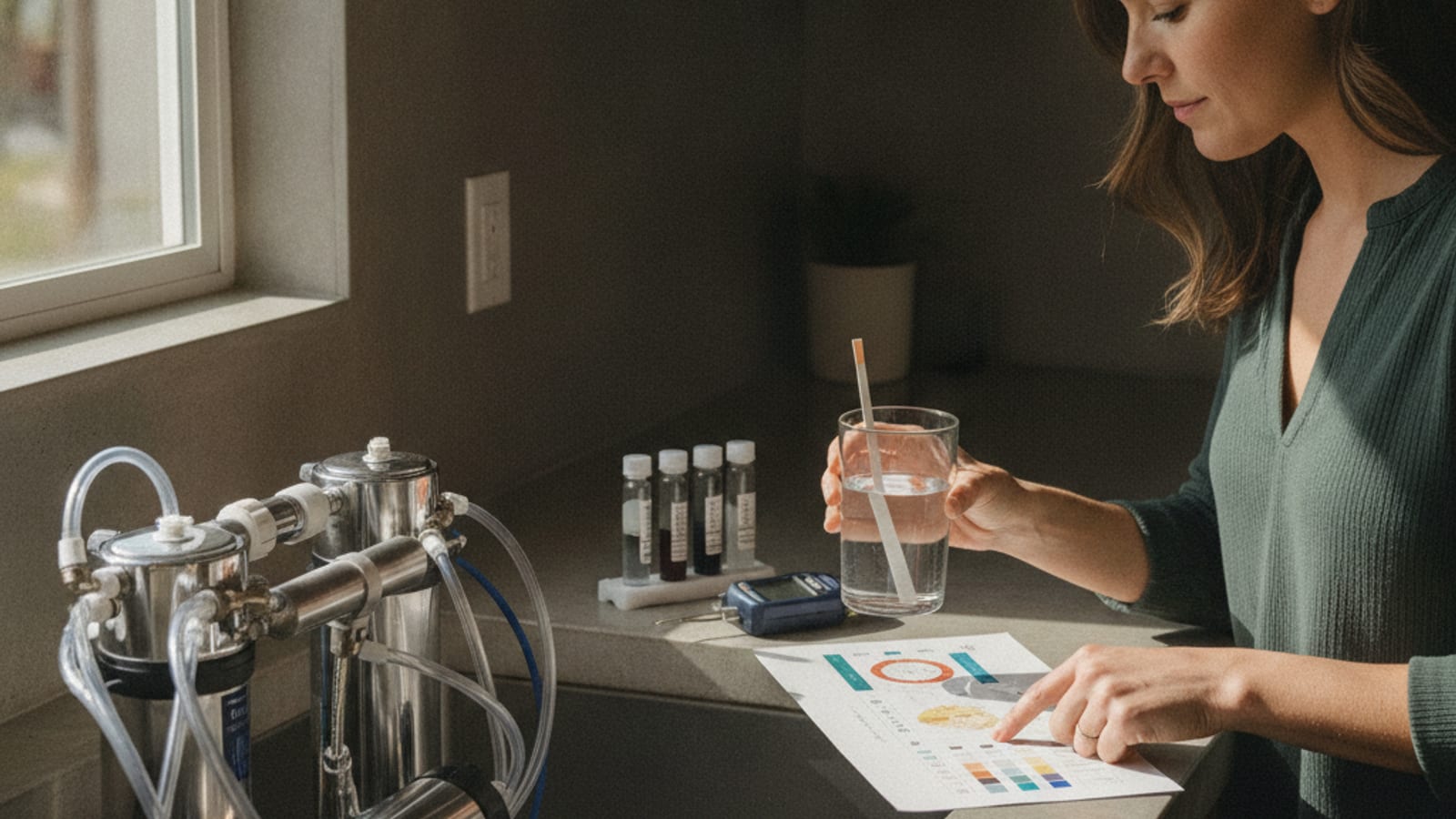
How to test your tap water at home
The City of San Diego reports that drinking water in its system averages about 16 grains per gallon and varies by area and water demand. A home test strip can provide a quick screening result for the measures listed on that kit, but it does not replace a laboratory analysis or establish that water is safe.
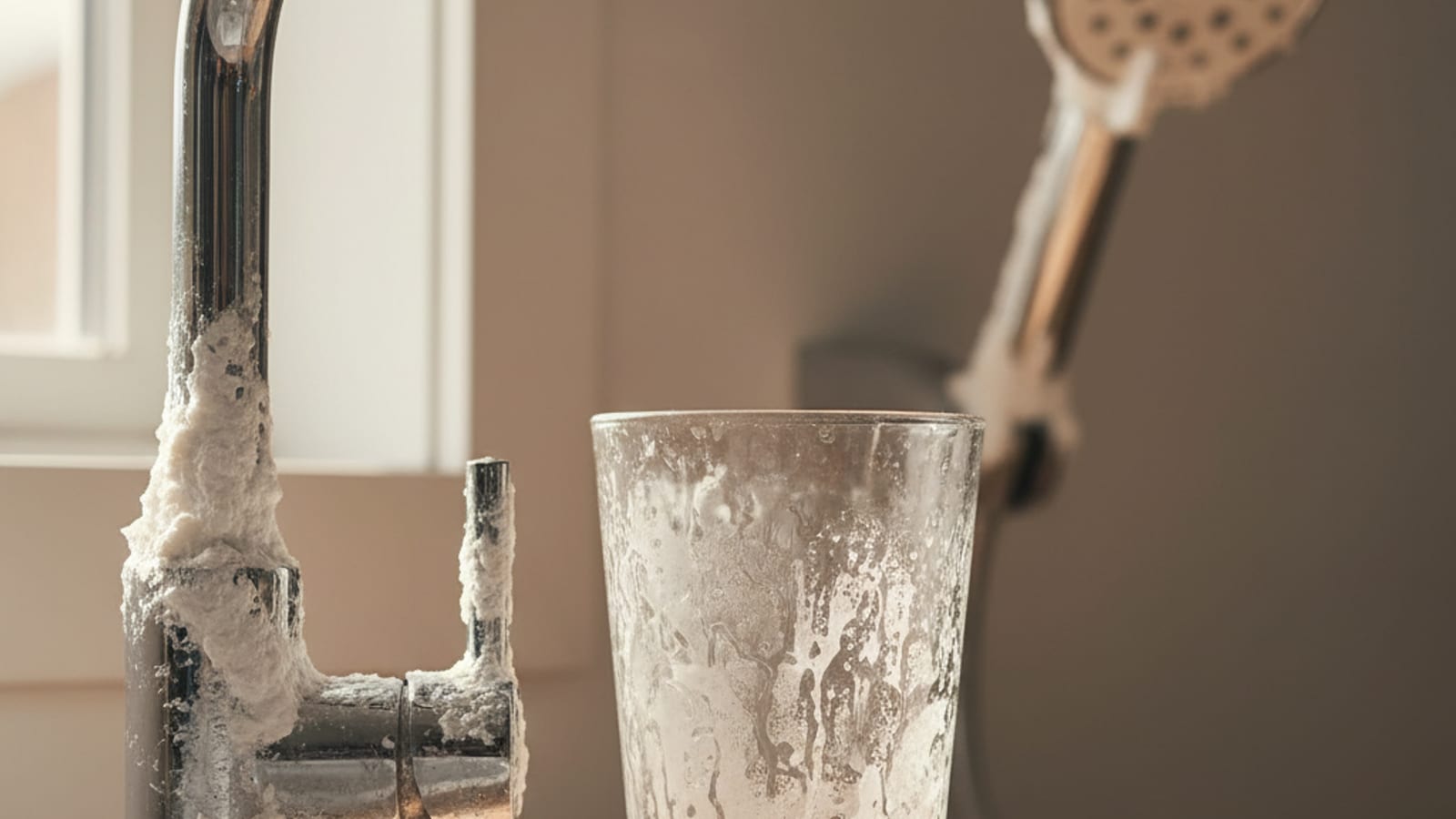
How to spot hard water in your home
Hardness minerals are not obvious from the water's smell or appearance, but scale, spotting, and changes in soap lather can provide useful clues. Those signs can have other causes, so confirm hardness with an appropriate test before choosing treatment.
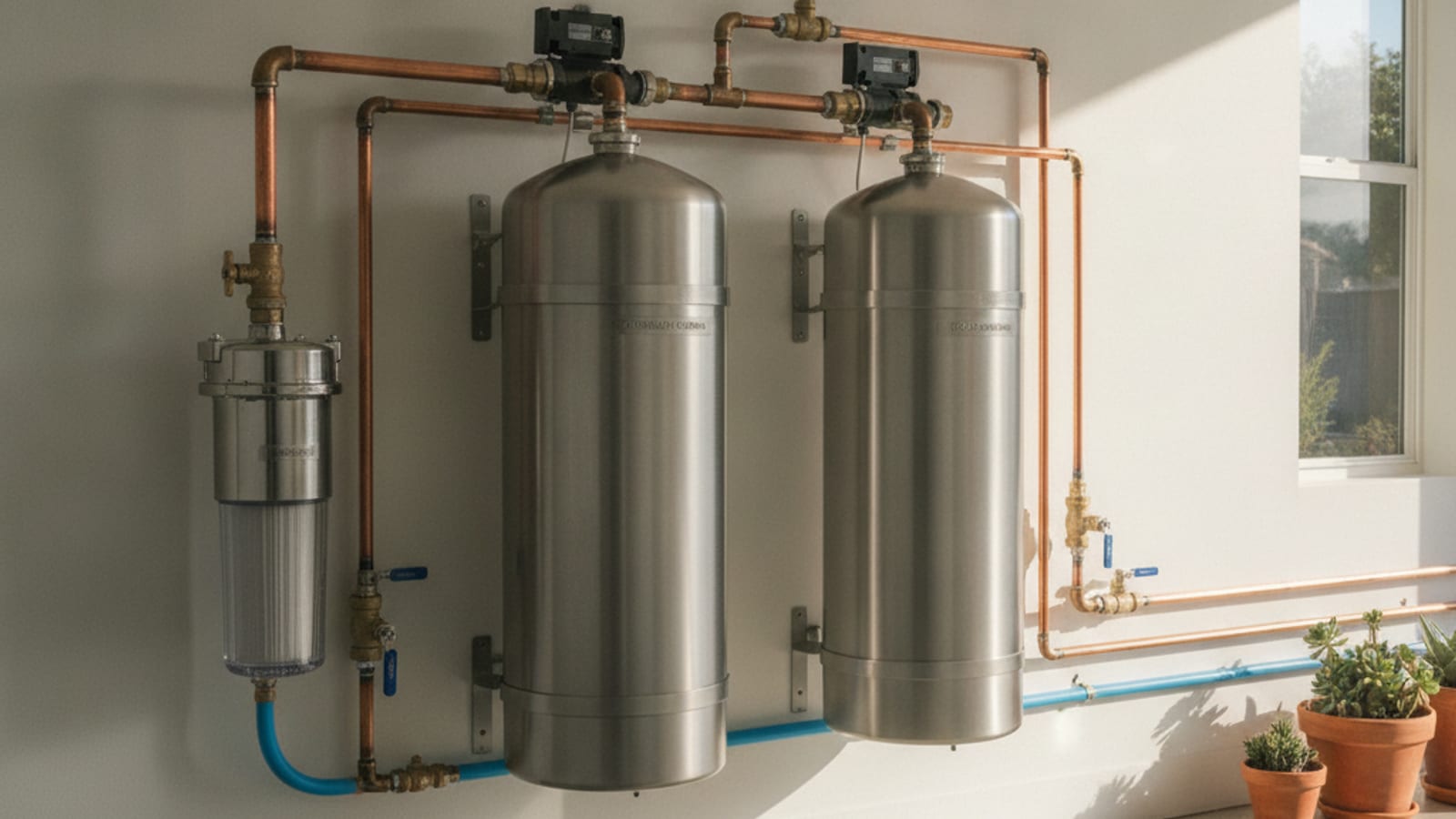
How a whole-house water filtration system works
A point-of-entry water-treatment system is installed on the line serving the home, so the fixtures downstream receive treated water. What it reduces depends on the exact equipment, media, flow conditions, and certified claims. Understanding that scope helps you compare a whole-house system with a point-of-use device at one tap.