PFAS in drinking water, explained
PFAS are a water-quality concern that requires source-specific information and appropriate testing. A clear-looking sample or a general field screen cannot establish whether PFAS are present, and a treatment category alone cannot establish reduction.
What you'll learn
- Why PFAS questions require current information for the water source
- How to check the serving utility's current report and notices
- Why ordinary field strips and free in-home screening do not confirm PFAS
- How to verify an exact model's certified PFAS reduction claim
- Why laboratory results and treatment verification must match the specific concern
Step by step
- Identify the utility serving the address or confirm that the property uses a private well.
- Review that utility's current water-quality report and notices for PFAS information applicable to the supply.
- If a test is needed, ask an appropriate state-certified laboratory about PFAS sampling, handling, analytes, and reporting limits before collecting the sample.
- Do not use a TDS meter, general-purpose strip, appearance, taste, or smell to rule PFAS in or out.
- For treatment, verify the exact model's independently certified reduction claim for the PFAS compound of concern; a generic NSF/ANSI 53 or 58 reference is not enough.
- Follow the manufacturer's replacement conditions and use appropriate follow-up testing when verification is needed.
A free in-home water screen does not confirm whether PFAS are present unless it includes a validated PFAS-specific method, which should be established before the visit. For treatment, request the exact model and its certified PFAS reduction claim rather than relying on a broad technology or standards label.
Rather have a pro handle it?
Connect with a separately licensed water-treatment provider in San Diego County. Ask about the free in-home water test.
Keep learning.
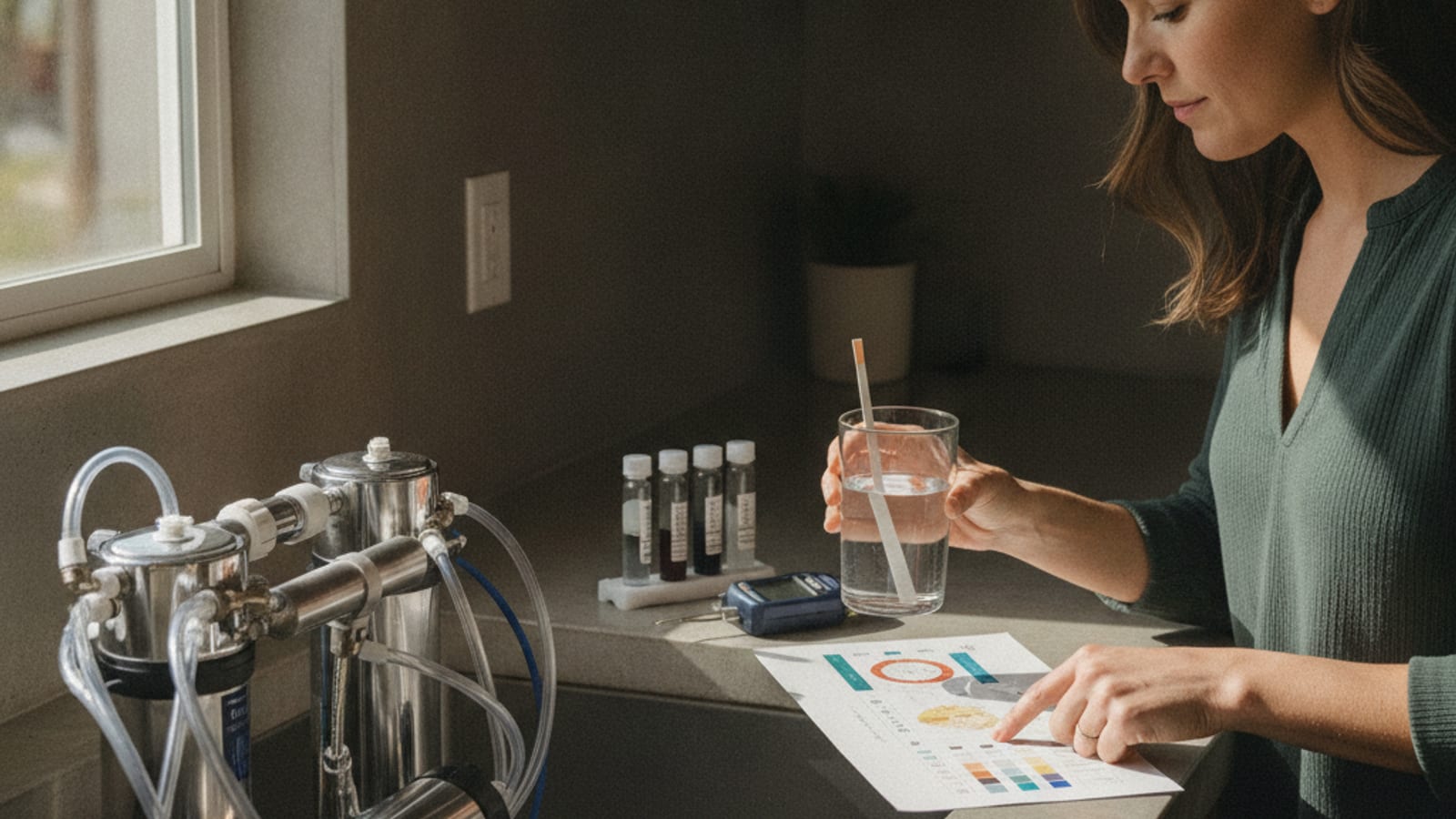
How to test your tap water at home
The City of San Diego reports that drinking water in its system averages about 16 grains per gallon and varies by area and water demand. A home test strip can provide a quick screening result for the measures listed on that kit, but it does not replace a laboratory analysis or establish that water is safe.
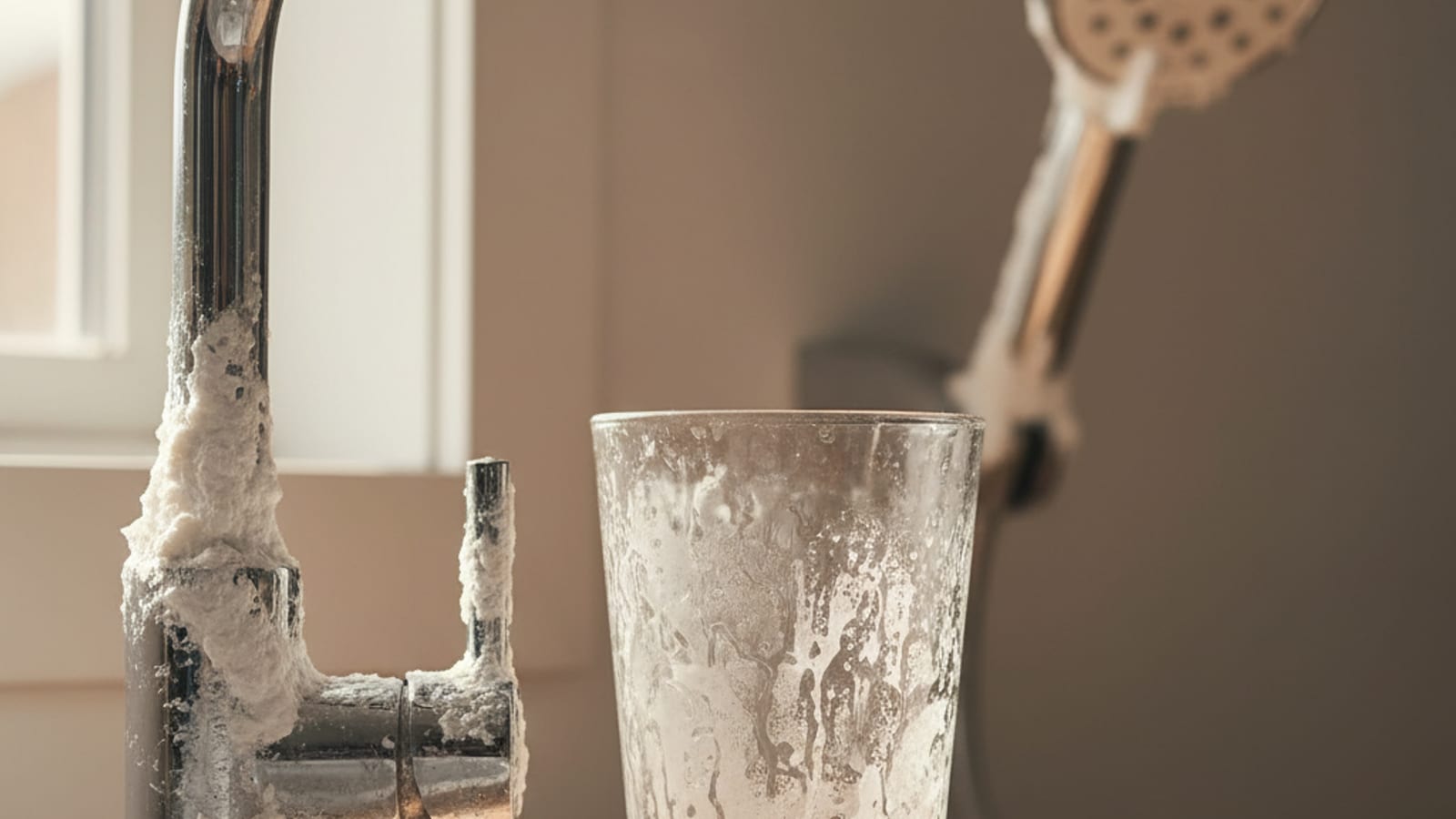
How to spot hard water in your home
Hardness minerals are not obvious from the water's smell or appearance, but scale, spotting, and changes in soap lather can provide useful clues. Those signs can have other causes, so confirm hardness with an appropriate test before choosing treatment.
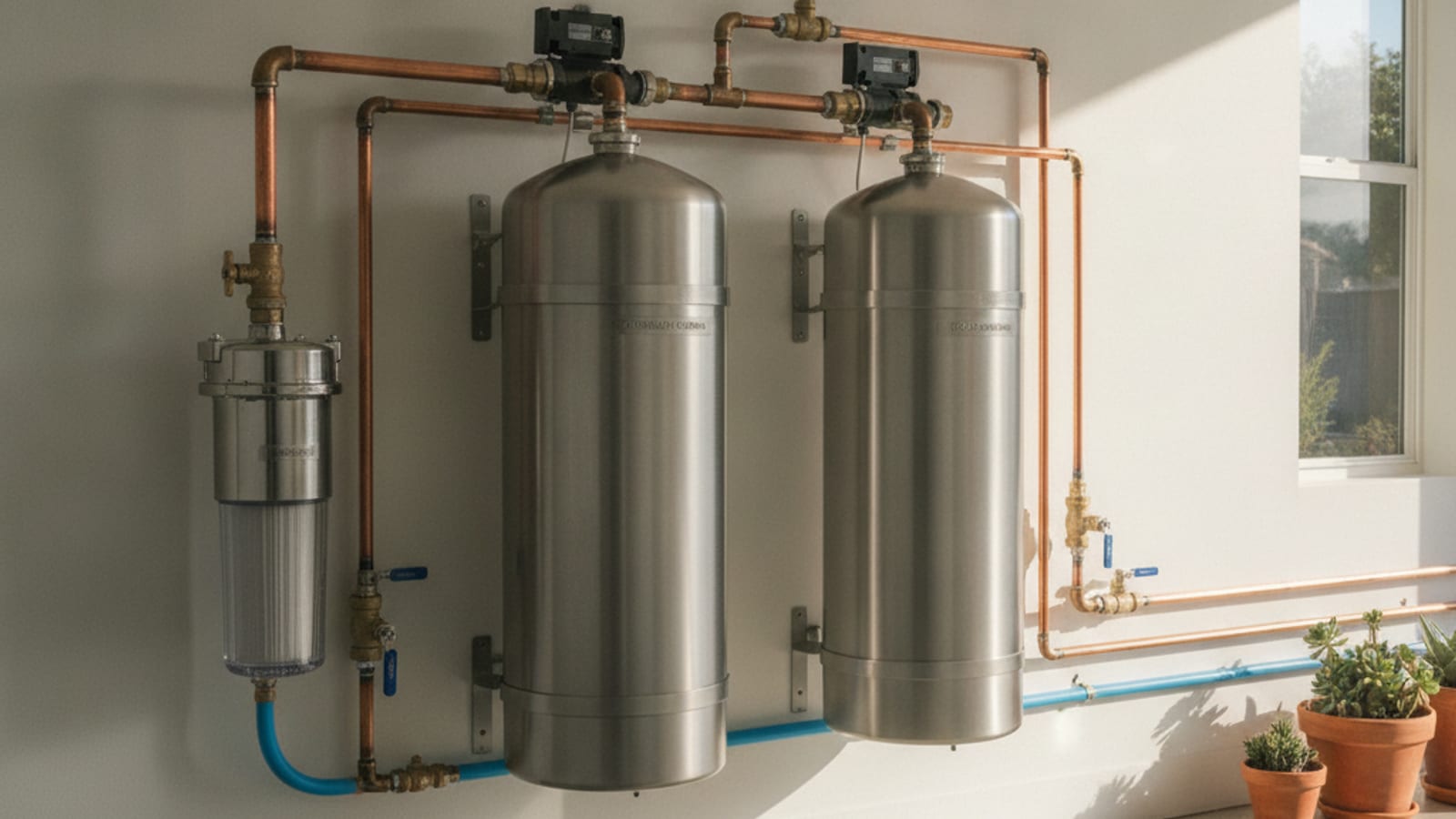
How a whole-house water filtration system works
A point-of-entry water-treatment system is installed on the line serving the home, so the fixtures downstream receive treated water. What it reduces depends on the exact equipment, media, flow conditions, and certified claims. Understanding that scope helps you compare a whole-house system with a point-of-use device at one tap.