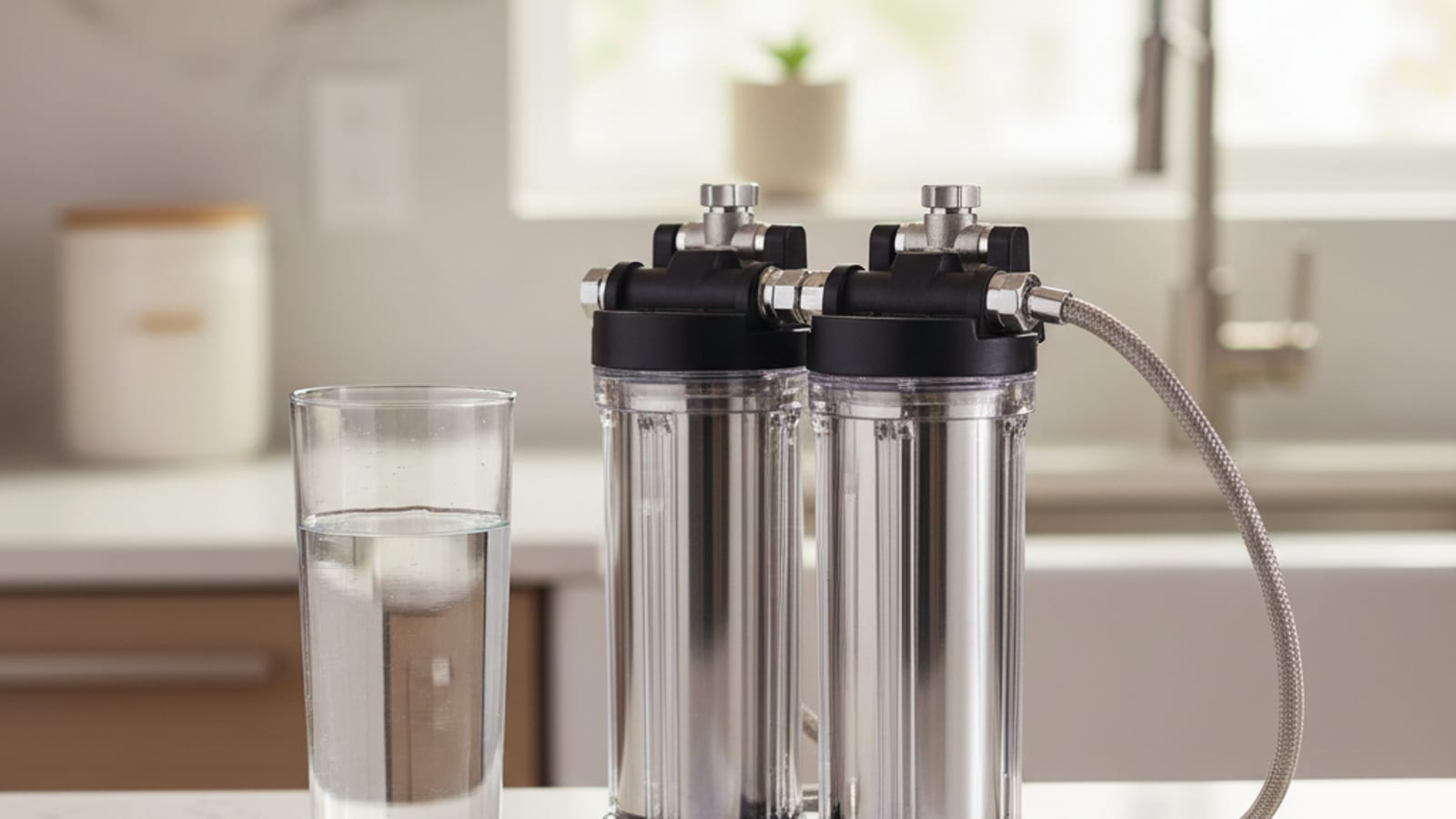
PFAS treatment does not have one reliable San Diego price. The total depends on the water source, the taps you want to treat, the exact model’s certified contaminant claim, installation conditions, replacement parts, and laboratory testing. A useful estimate separates those items instead of treating a system price as the whole cost.
Start with the treatment goal and the exact model
EPA lists several home-treatment technologies, including reverse osmosis, activated carbon, and ion-exchange resins. That does not mean every product using one of those technologies reduces PFAS. EPA advises checking the certification and performance data for the exact contaminant you want to address. Its WaterSense reverse-osmosis product search, for example, lets shoppers filter exact models by a verified total-PFAS reduction claim.
The first decision is scope. A point-of-use system treats water at a selected tap, usually for drinking and cooking. A point-of-entry system treats most or all water entering the home. EPA’s home water-treatment guide says point-of-entry equipment generally costs thousands of dollars, while reverse-osmosis systems tend to cost a few hundred dollars and may require professional installation. Those are broad national treatment categories, not the price of a PFAS-certified model, a San Diego installation quote, or a Filter Pros price.
Point-of-use reverse osmosis: the budget-friendly route for drinking water
If the goal is PFAS reduction at the kitchen tap, compare point-of-use RO models that carry a verified PFAS reduction claim. The quote should identify the model number, included faucet or tank, plumbing work, and commissioning. Do not treat NSF/ANSI 58 or a WaterSense label by itself as proof that a model reduces every contaminant. Check the model’s performance data sheet and certification listing for PFAS.
Ownership cost includes replacement prefilters and membranes at the manufacturer’s stated intervals, plus the water the unit sends to the drain. Efficiency varies by model. Compare both the replacement-part schedule and the exact model’s efficiency rating. Our reverse osmosis cost guide explains the other quote variables.
Whole-house PFAS-rated carbon or ion exchange: the bigger investment
If the treatment goal applies beyond one drinking-water tap, ask about point-of-entry equipment. The quote should state the exact media or model, its verified PFAS claim, rated flow, pressure requirements, plumbing changes, bypass arrangement, media or cartridge replacement plan, and disposal terms. Larger treatment scope usually raises purchase, installation, and maintenance cost.
Point-of-entry treatment can be appropriate when the documented treatment goal covers many fixtures. Point-of-use treatment can be a narrower option when the goal is drinking and cooking water. Neither choice should be automatic, and no generic technology name proves the outcome.
Find out whether PFAS testing is warranted
For public water, begin with the current water-quality report and notices from the utility that serves the property. The City of San Diego water-quality portal provides City reports and contacts, but City data should not be applied to another district, a private well, or every building tap.
Private-well owners are responsible for their own testing. CDC recommends using a state-certified laboratory and asking the local health or environmental department which additional chemicals fit the property’s location. If PFAS is a concern, confirm that the laboratory’s panel includes the compounds in question. For more context, see our PFAS in San Diego drinking water guide.
Build a complete PFAS-treatment budget
Ask each provider to separate these line items in writing:
- state-certified laboratory analysis, including the named PFAS panel;
- the exact treatment model or media and its applicable certified reduction claim;
- installation, plumbing alterations, permits if applicable, and startup;
- replacement filters, membranes, or media at the manufacturer’s intervals;
- water and energy use where relevant; and
- post-installation laboratory testing to confirm performance for the identified concern.
This makes quotes easier to compare and exposes missing ownership costs. A basic in-home screening may help discuss water characteristics or equipment fit, but it is not a PFAS laboratory result. See how to remove PFAS from San Diego water and our PFAS removal service page for the next steps.
Frequently asked questions
Does boiling water remove PFAS? Do not rely on boiling to address chemical contamination. CDC advises that boiling does not remove chemicals from contaminated well water.
Do standard pitcher filters remove PFAS? Do not decide from the product category alone. Check the exact model’s certification listing and performance data sheet for a PFAS reduction claim.
Is San Diego’s tap water safe from PFAS right now? Check the current report and notices from the utility that serves the address. If you use a private well or need a tap-specific answer, ask a state-certified laboratory and the appropriate health authority what testing fits the property.
Can a water softener remove PFAS? Conventional ion-exchange softeners are designed to reduce calcium and magnesium hardness. Do not assume a softener reduces PFAS unless the exact product has a verified claim for that purpose.
The bottom line
Start with the serving utility’s report or appropriate certified-laboratory testing. Then compare exact-model performance, treatment scope, installation, consumables, and verification testing. Filter Pros San Diego can introduce you to separately operated, licensed independent providers who assess and quote their own work. Call (858) 400-6508 to request an introduction.